DESCRIPTION
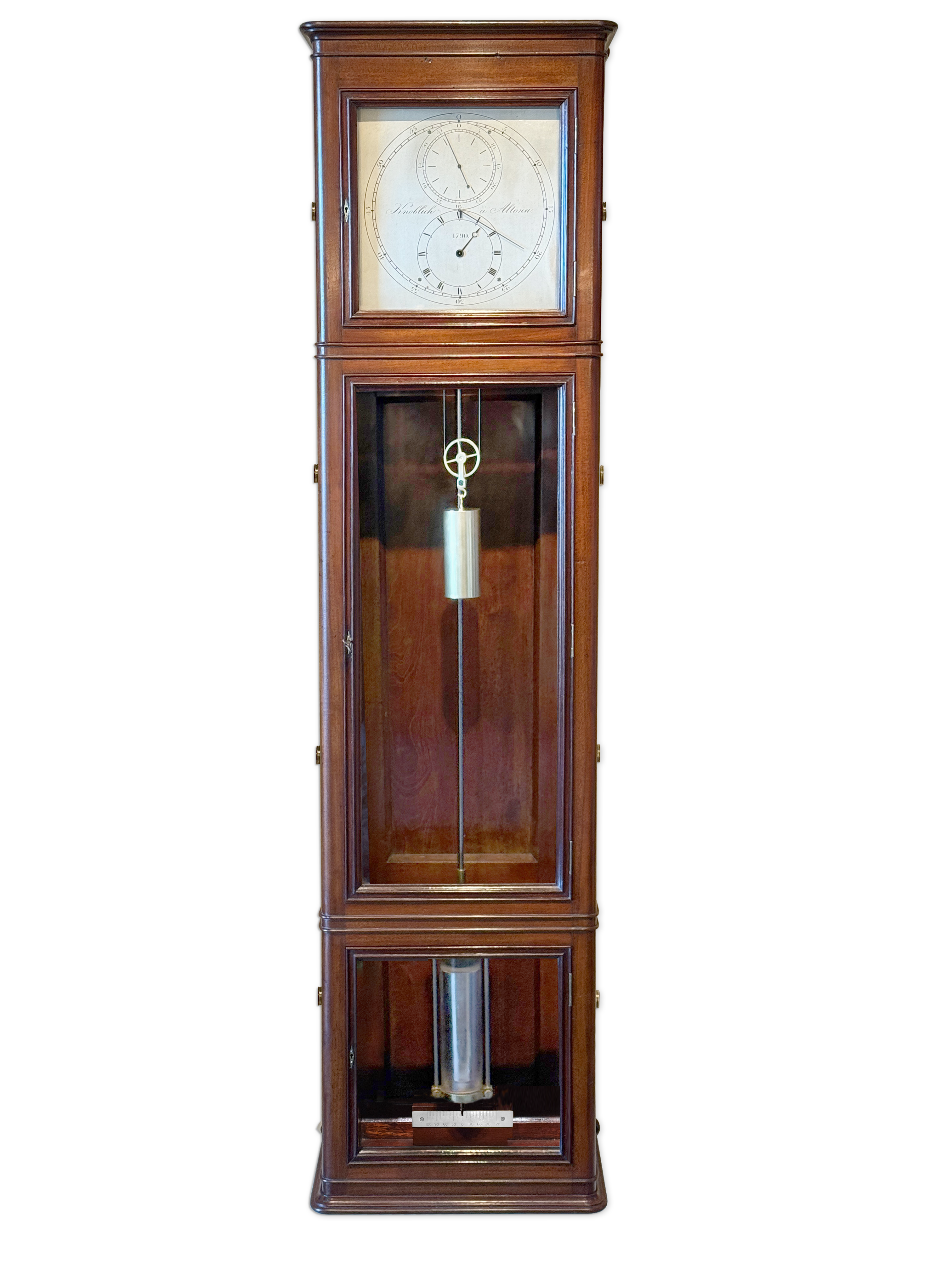
Size: 52.5" high x 13.5" wide x 8.5" deep
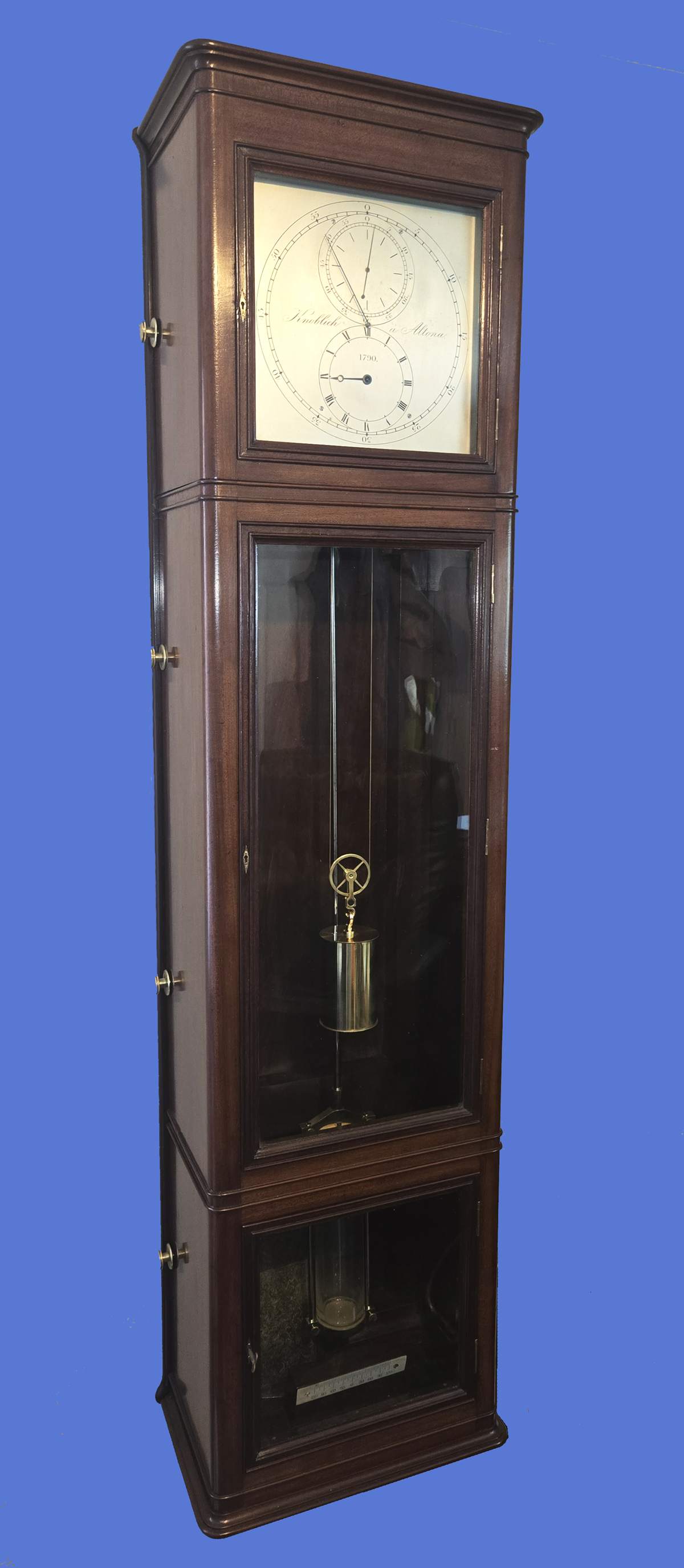
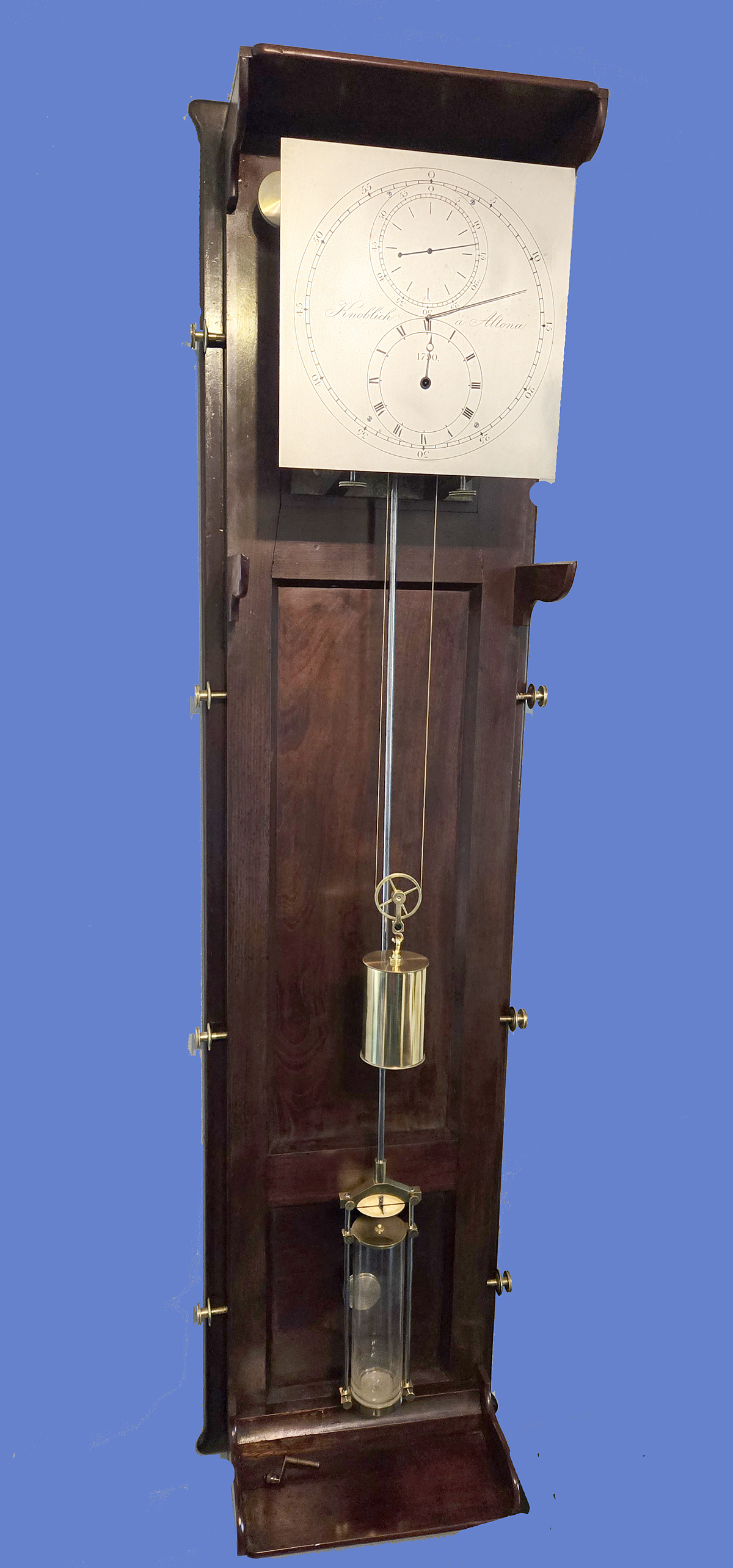
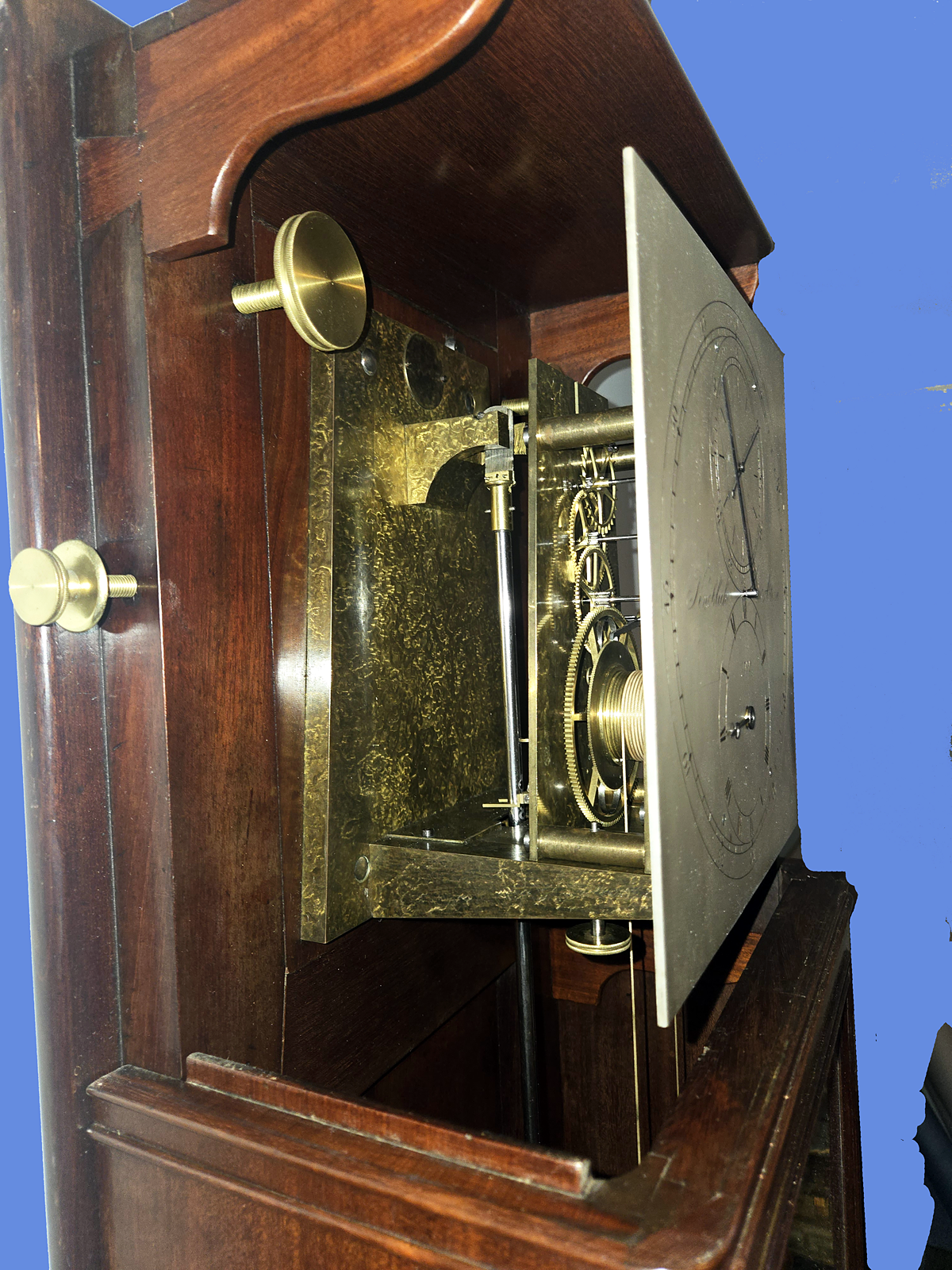
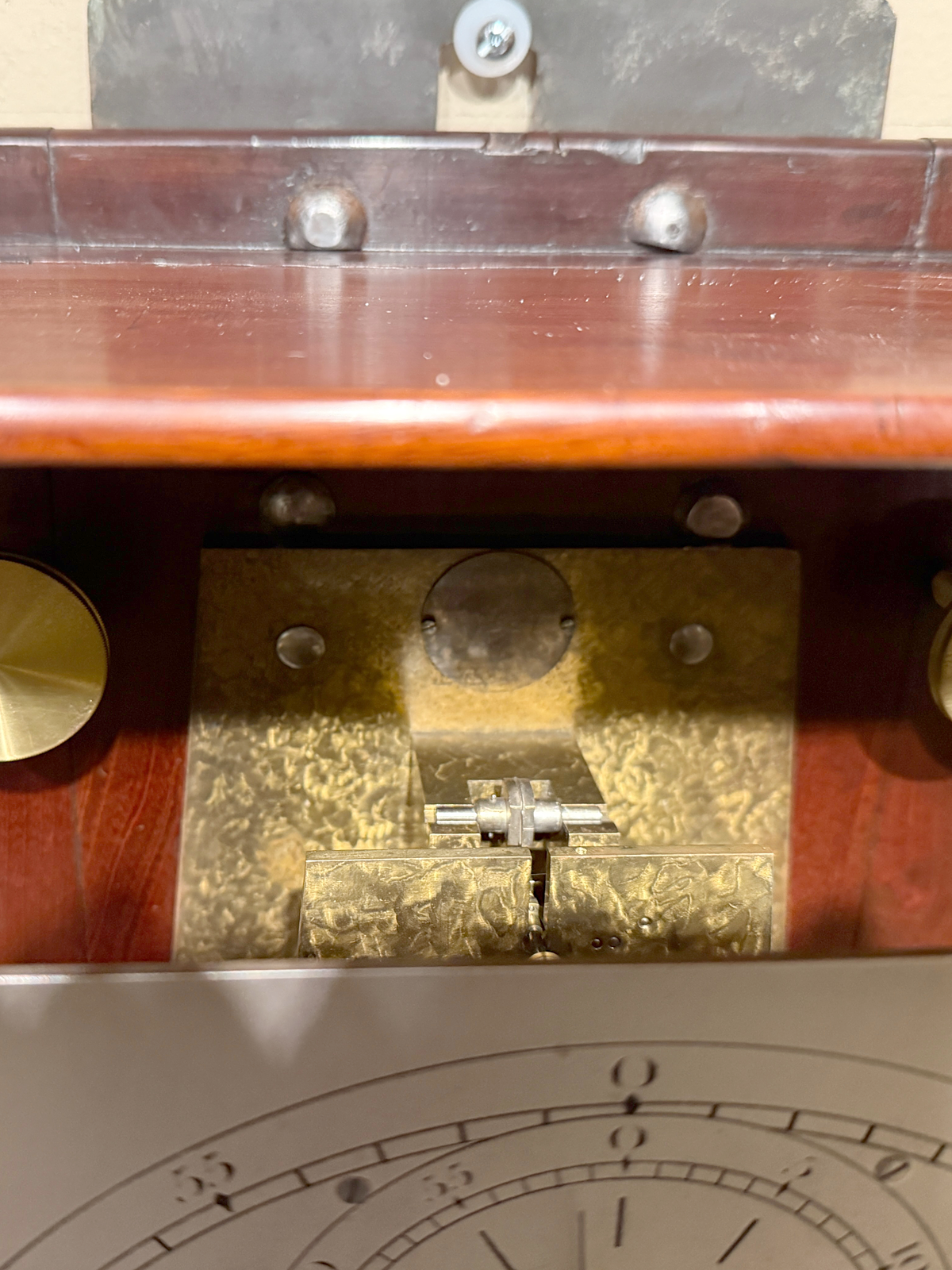
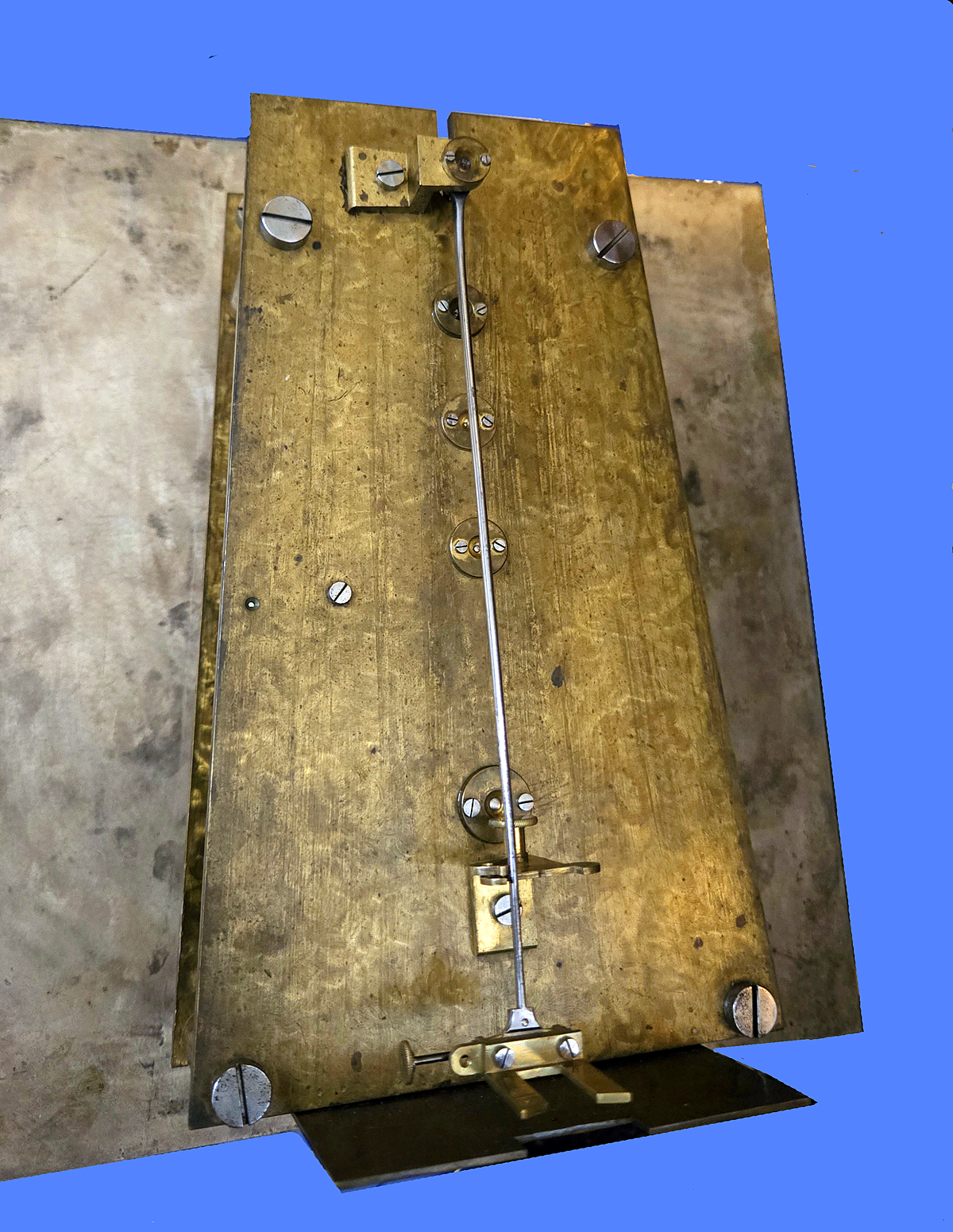
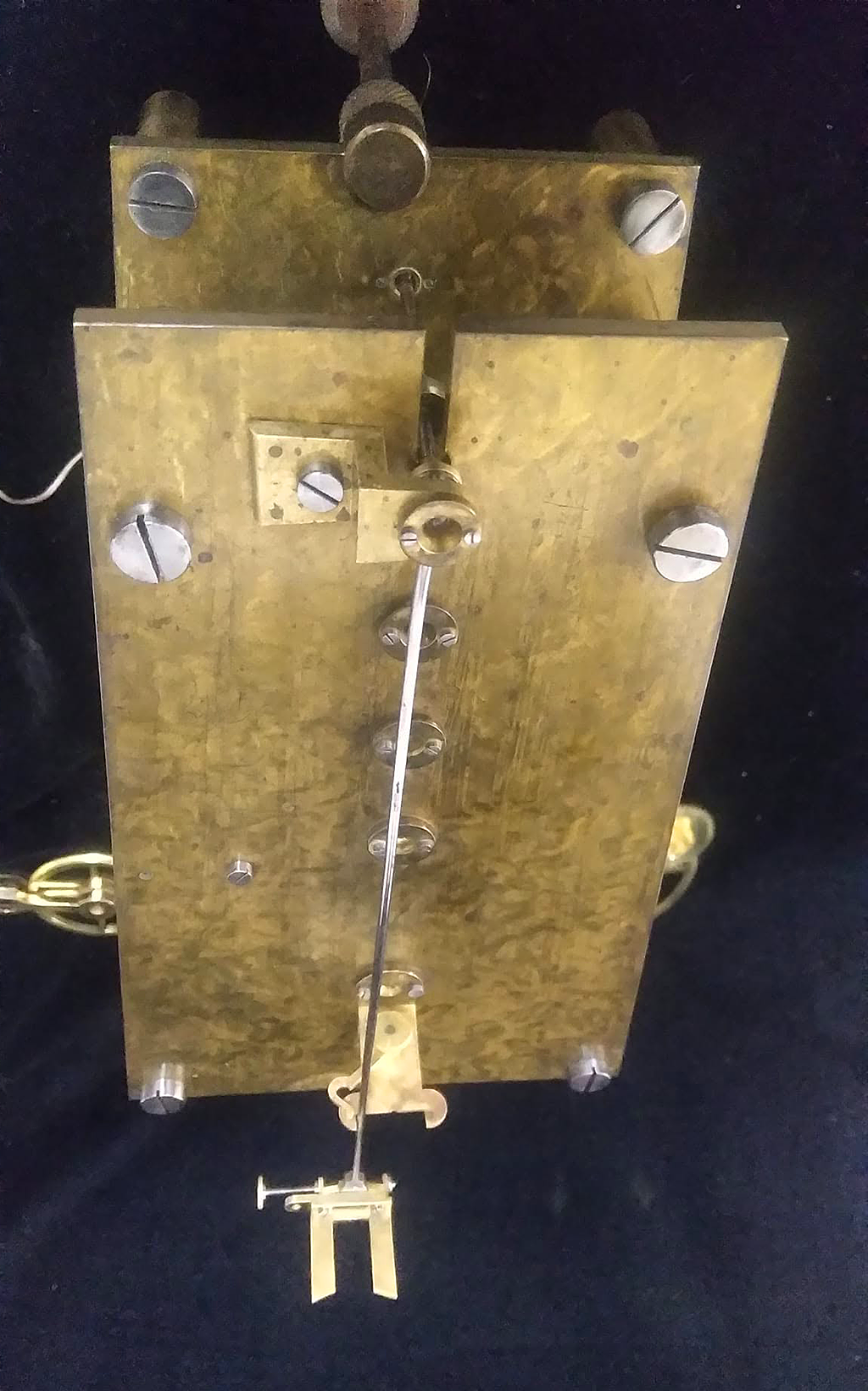
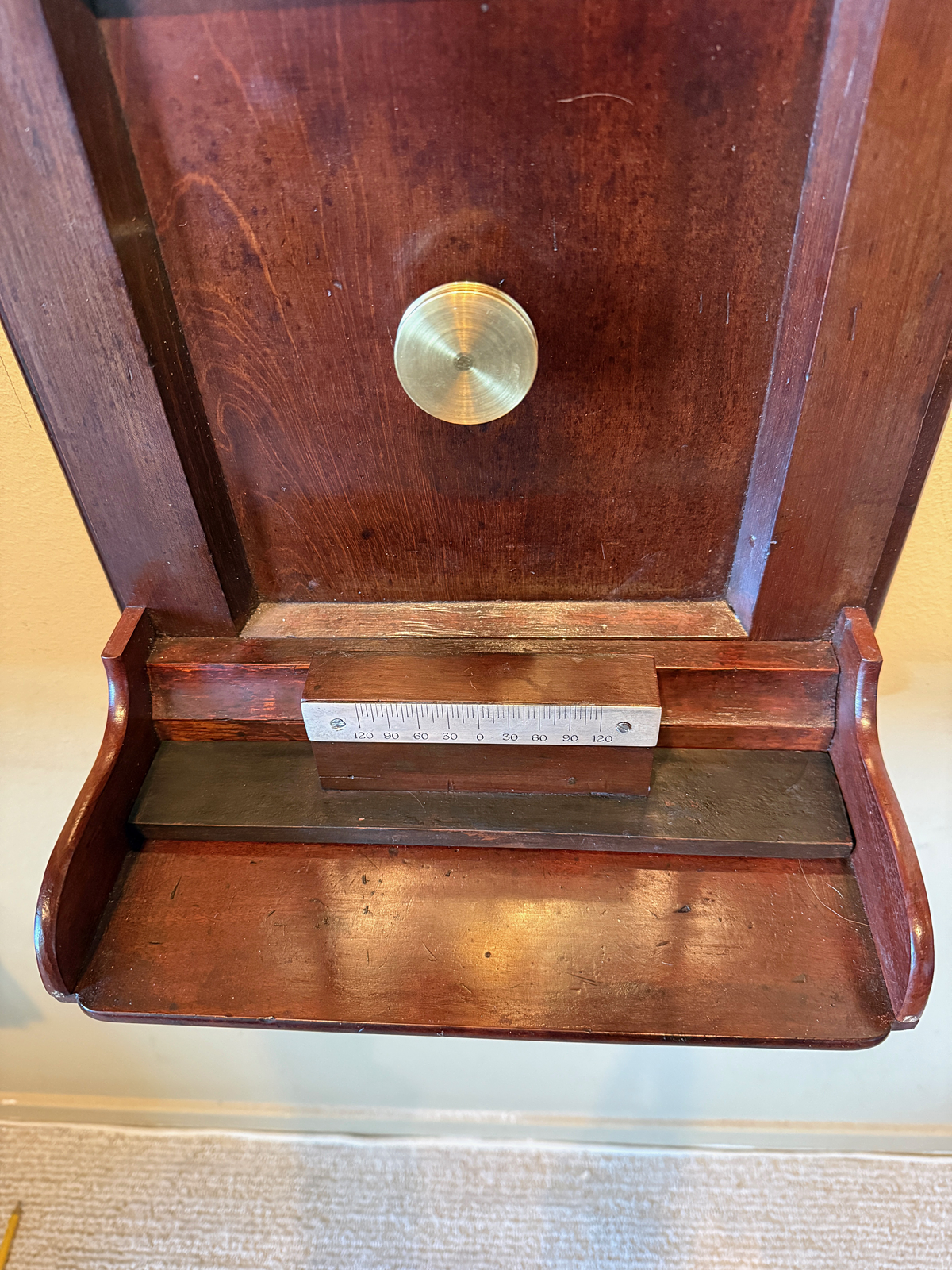
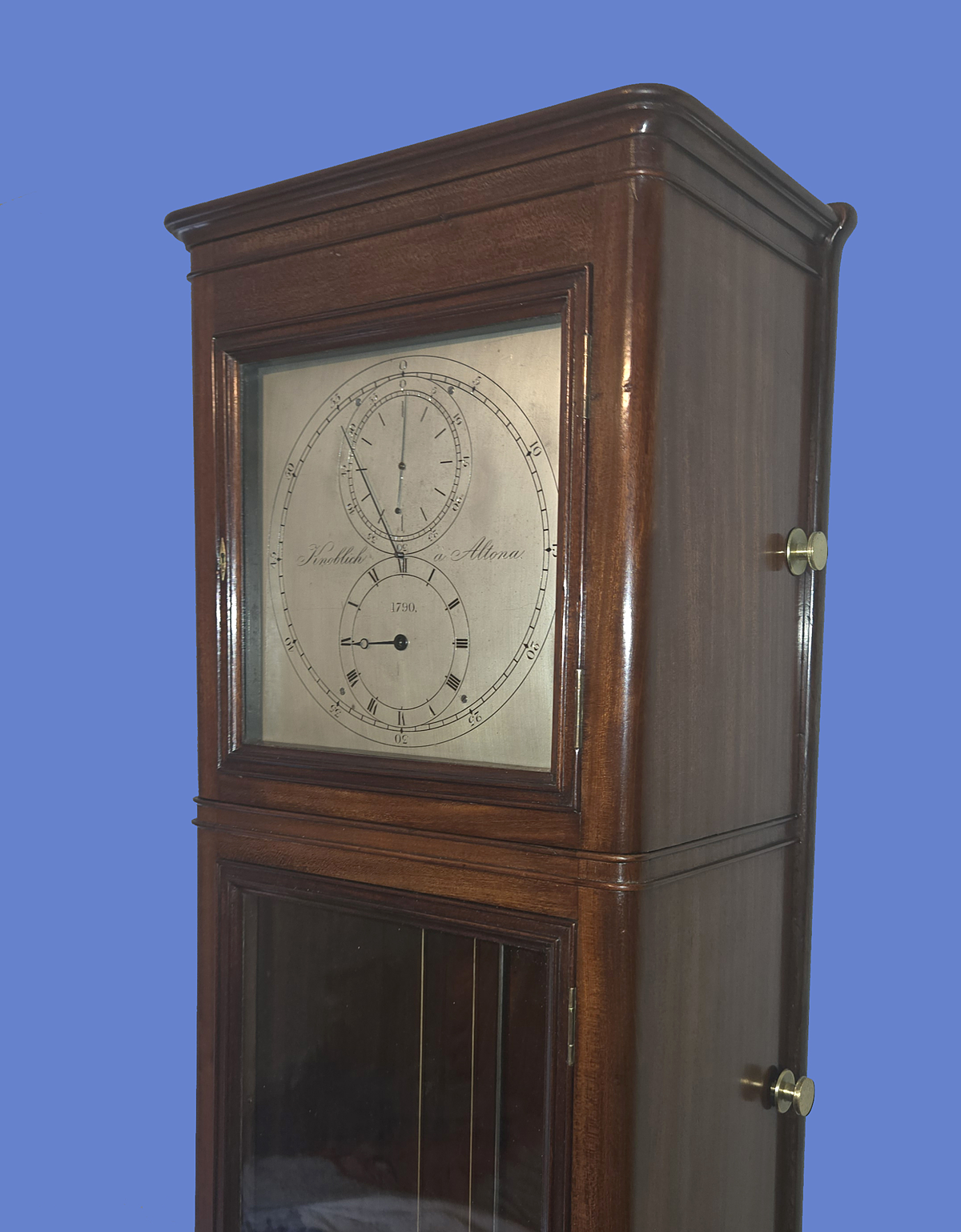
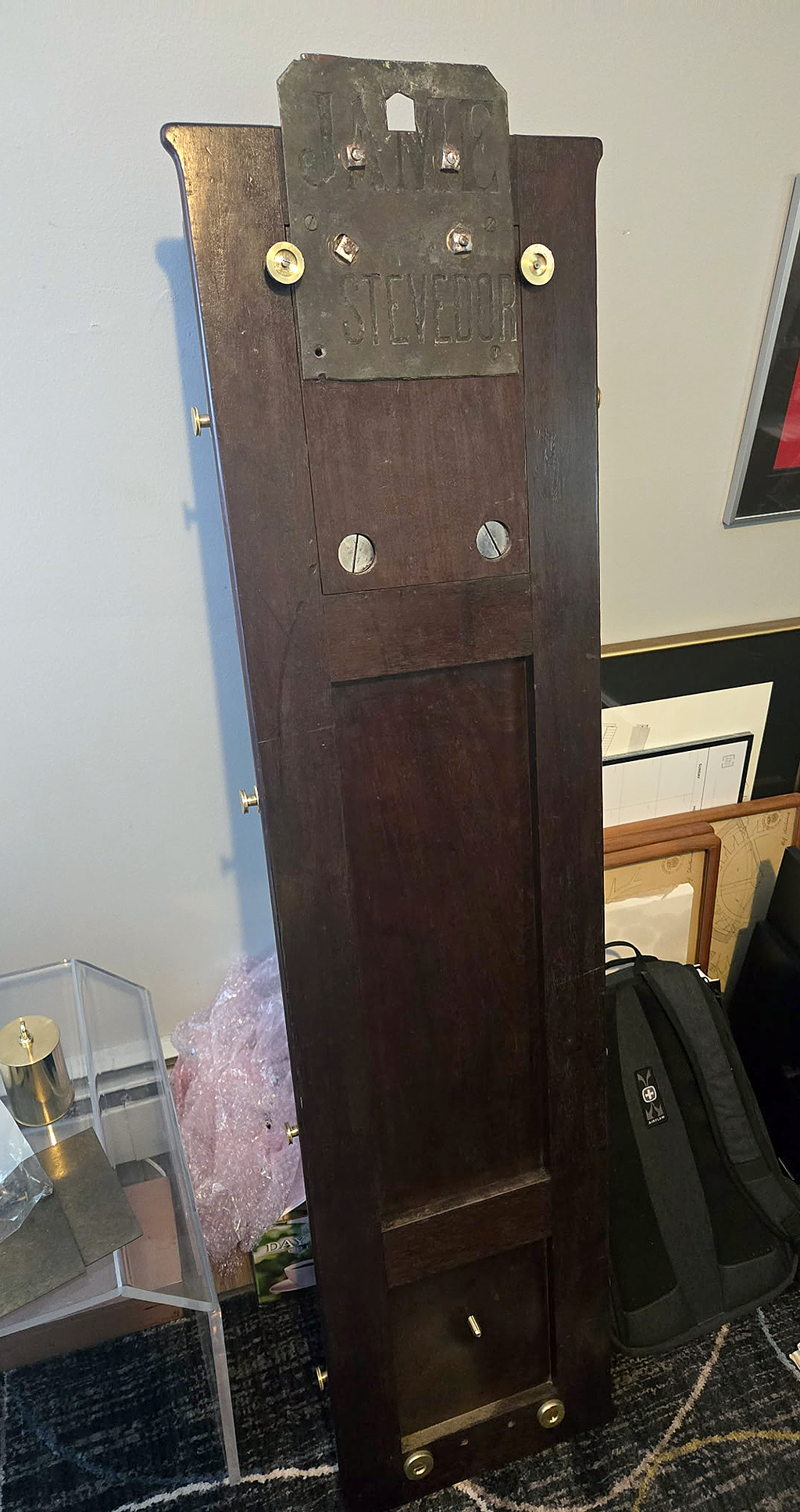
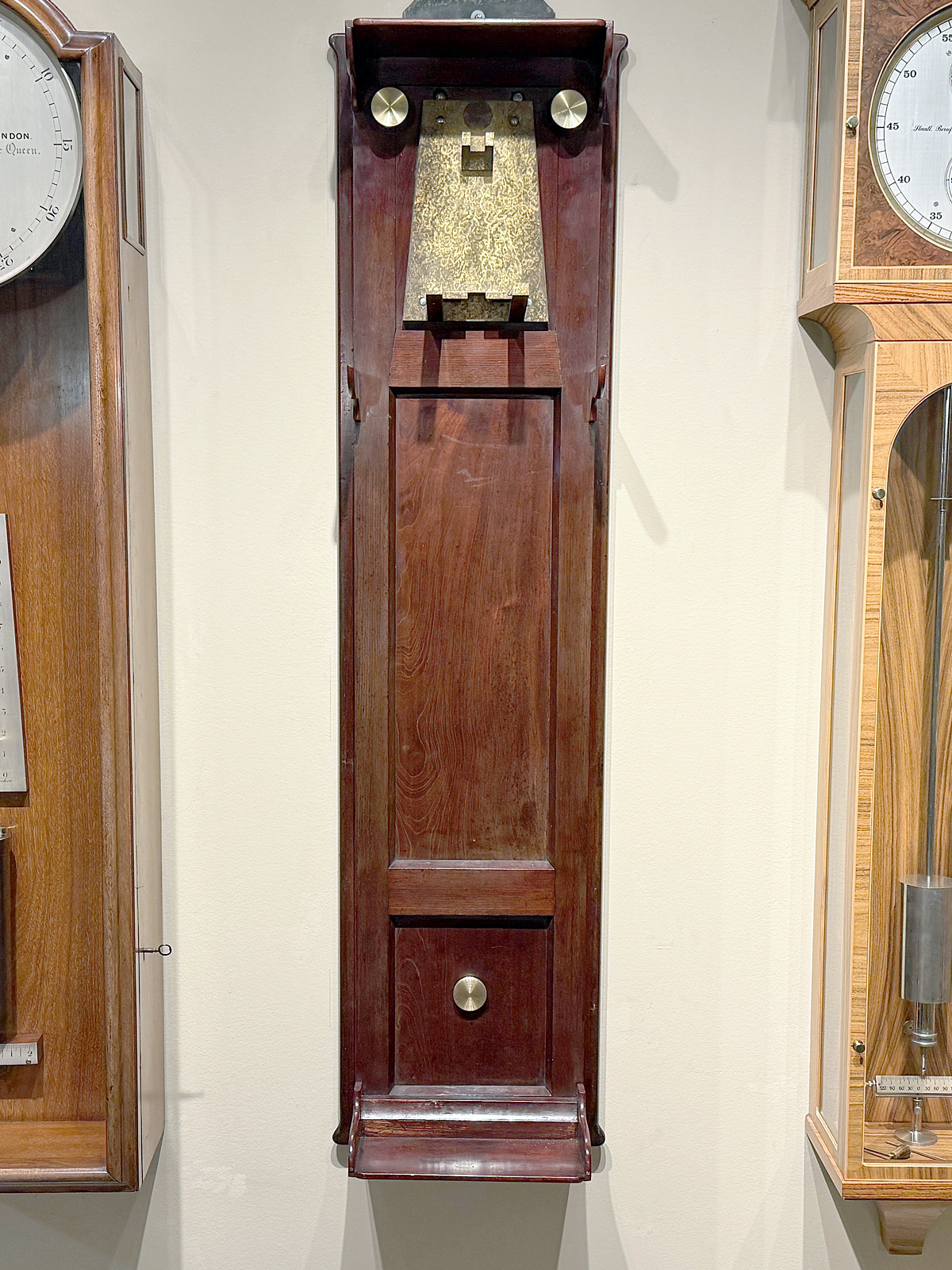
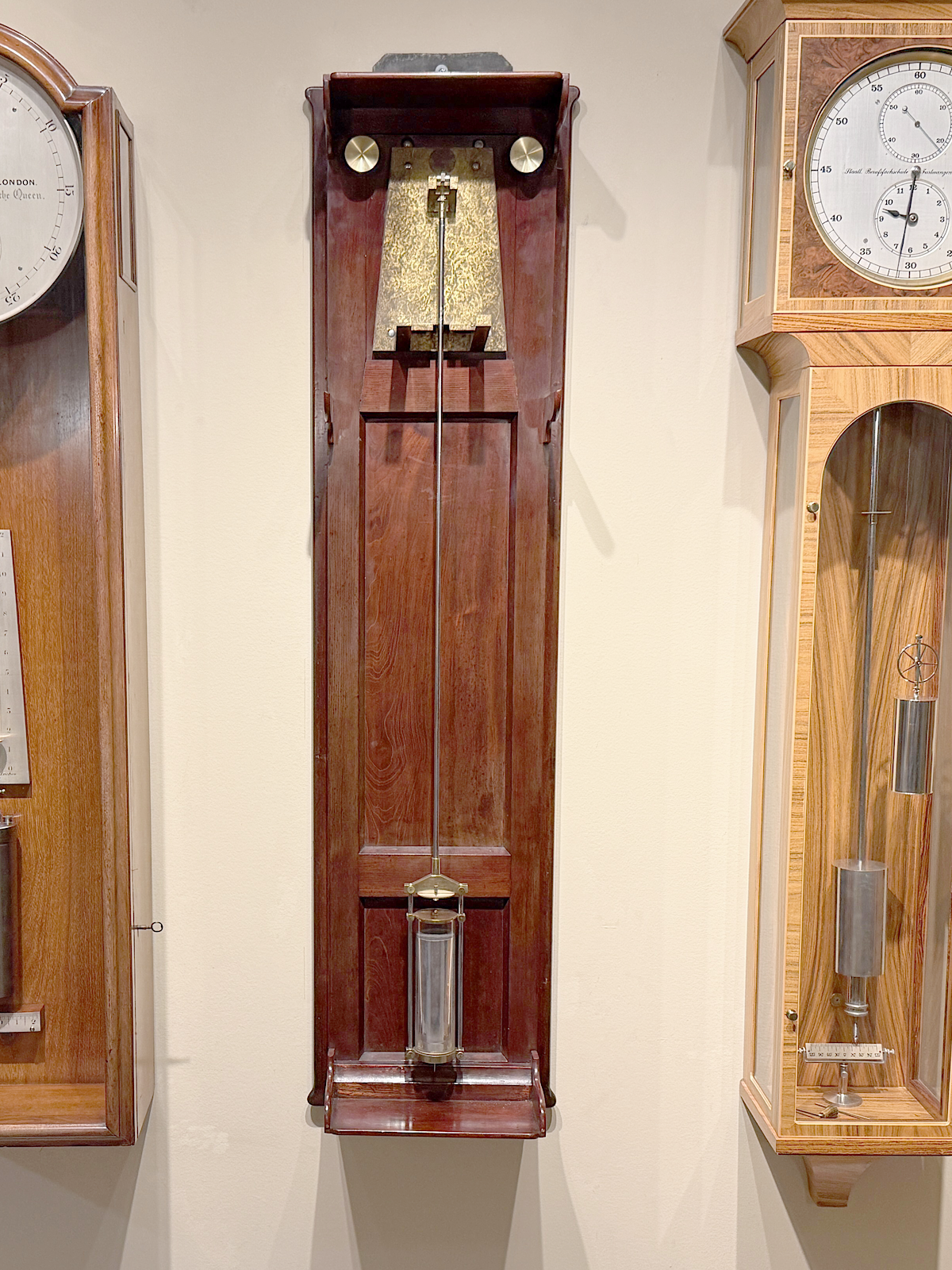
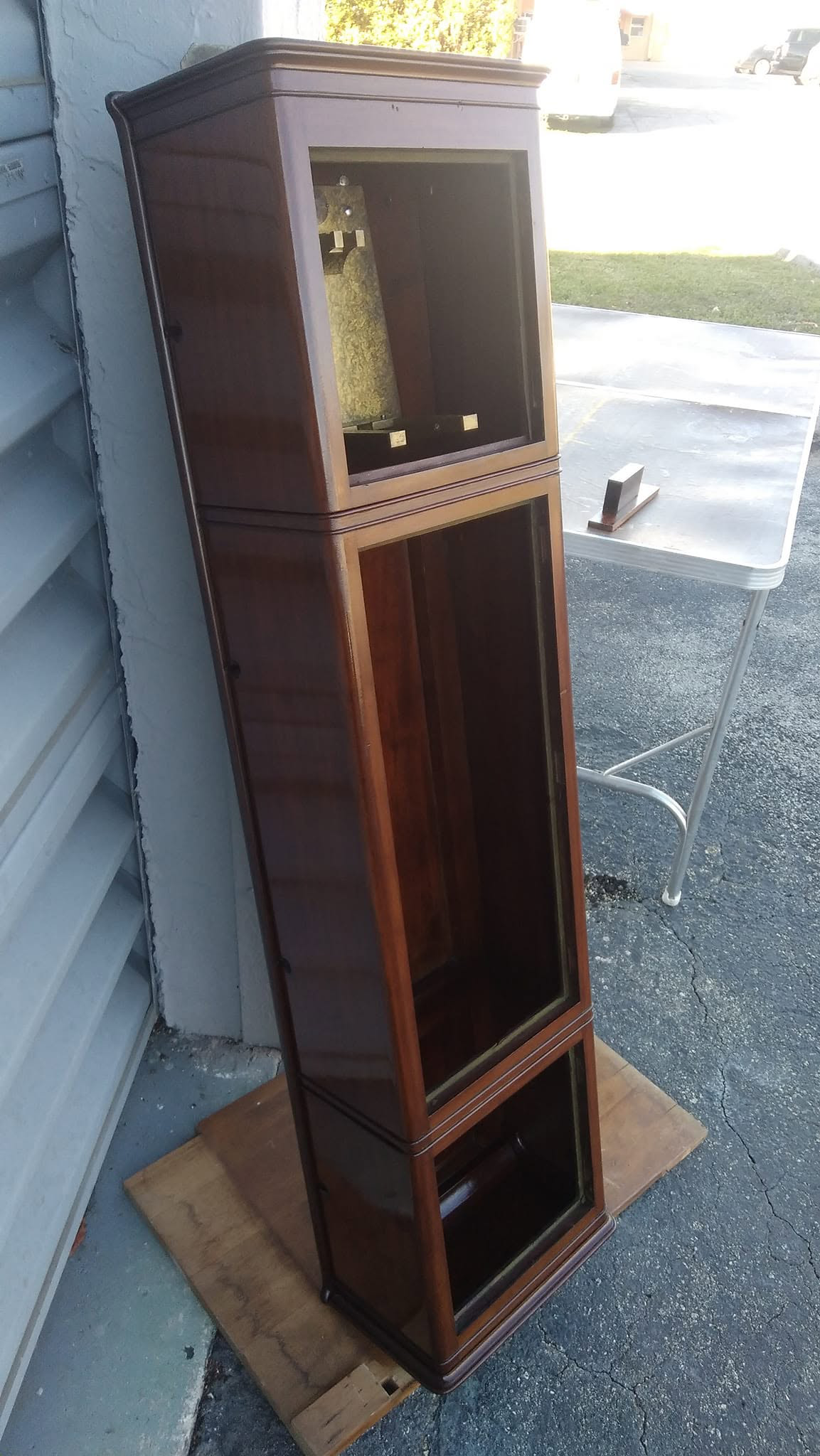
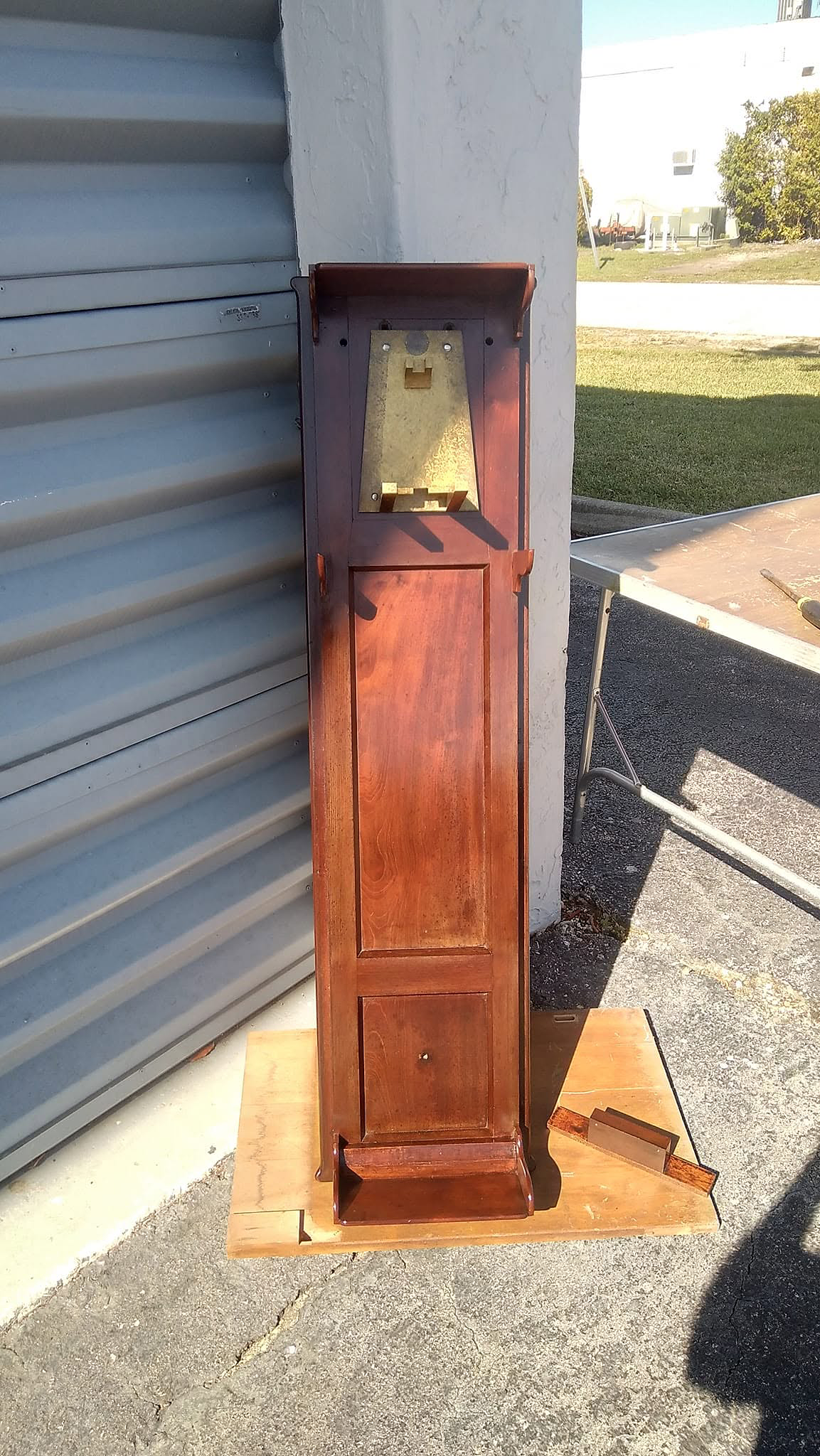
Case: The mahogany case has three hinged felt lined doors with locks. The thick paneled backboard has giant knurled brass set screws, a thick movement and pendulum bracket and two removeable covers held in place by 8 knurled brass screws.
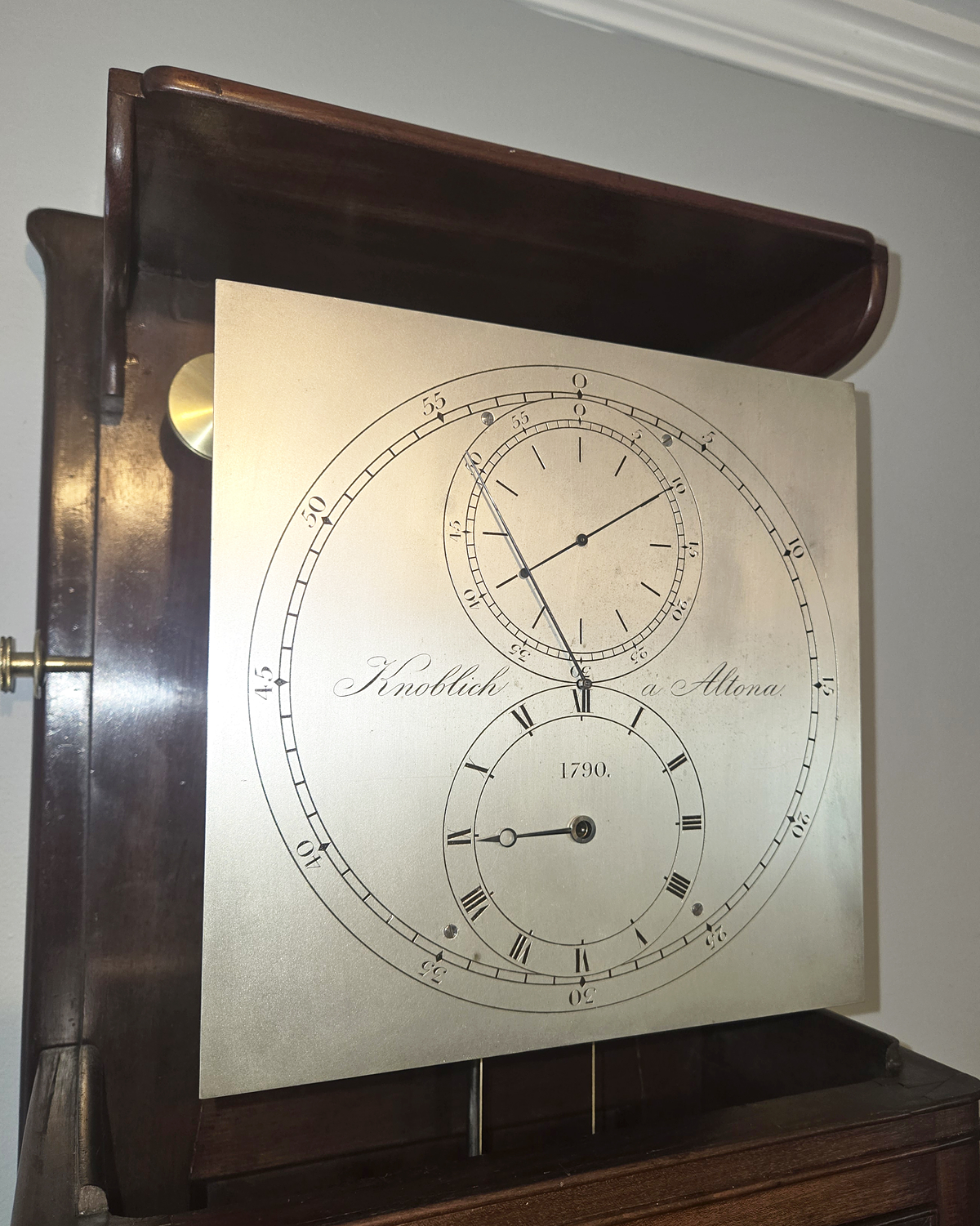
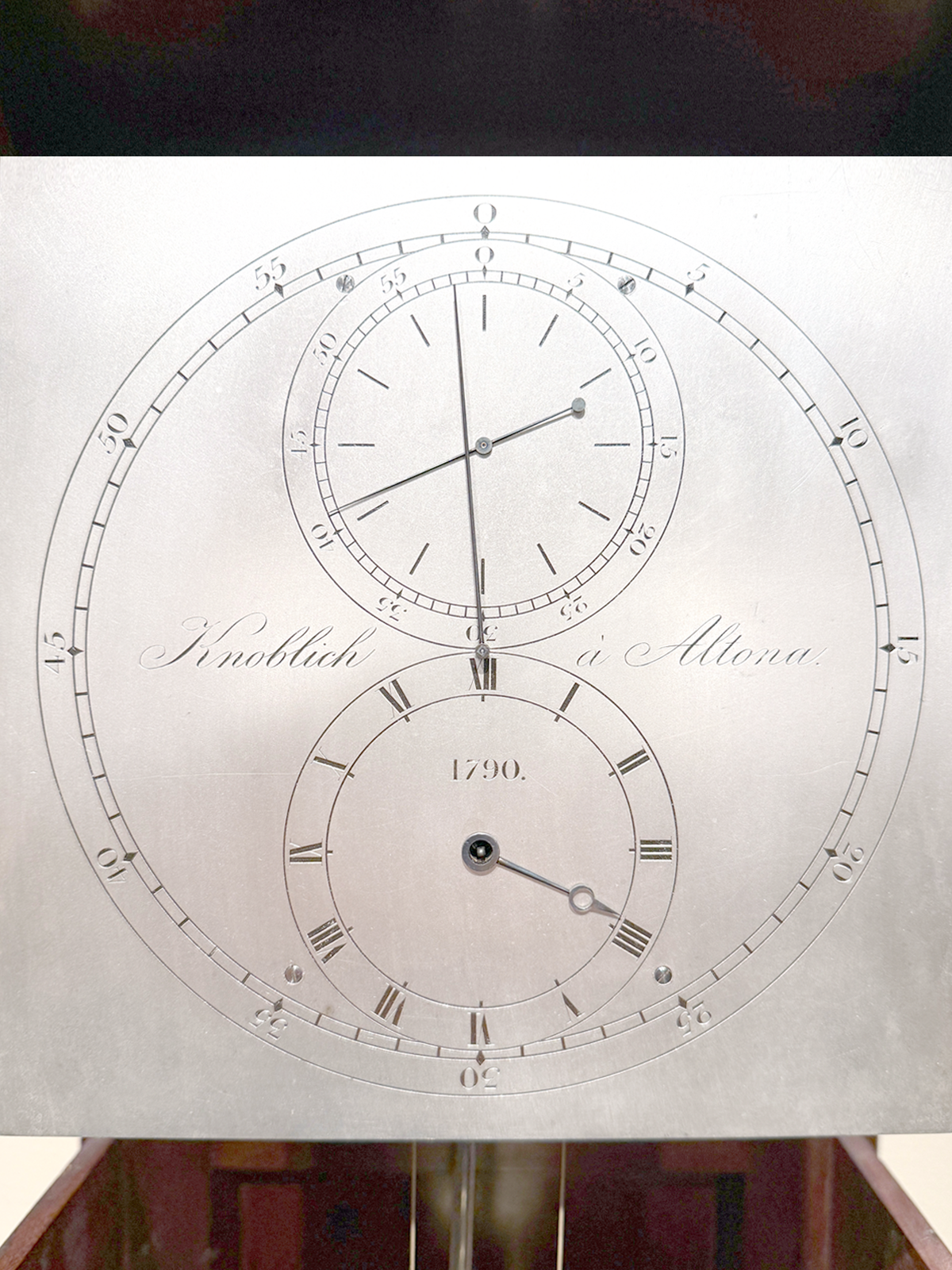
Dial: The 8 7/8 in. finely engraved silvered astro dial has Roman numerals for the hours, Arabic numbers for both the five-minute marks and the seconds dial, observatory marks, steel cut hands and is signed by the maker 'Knoblich a Altona'.
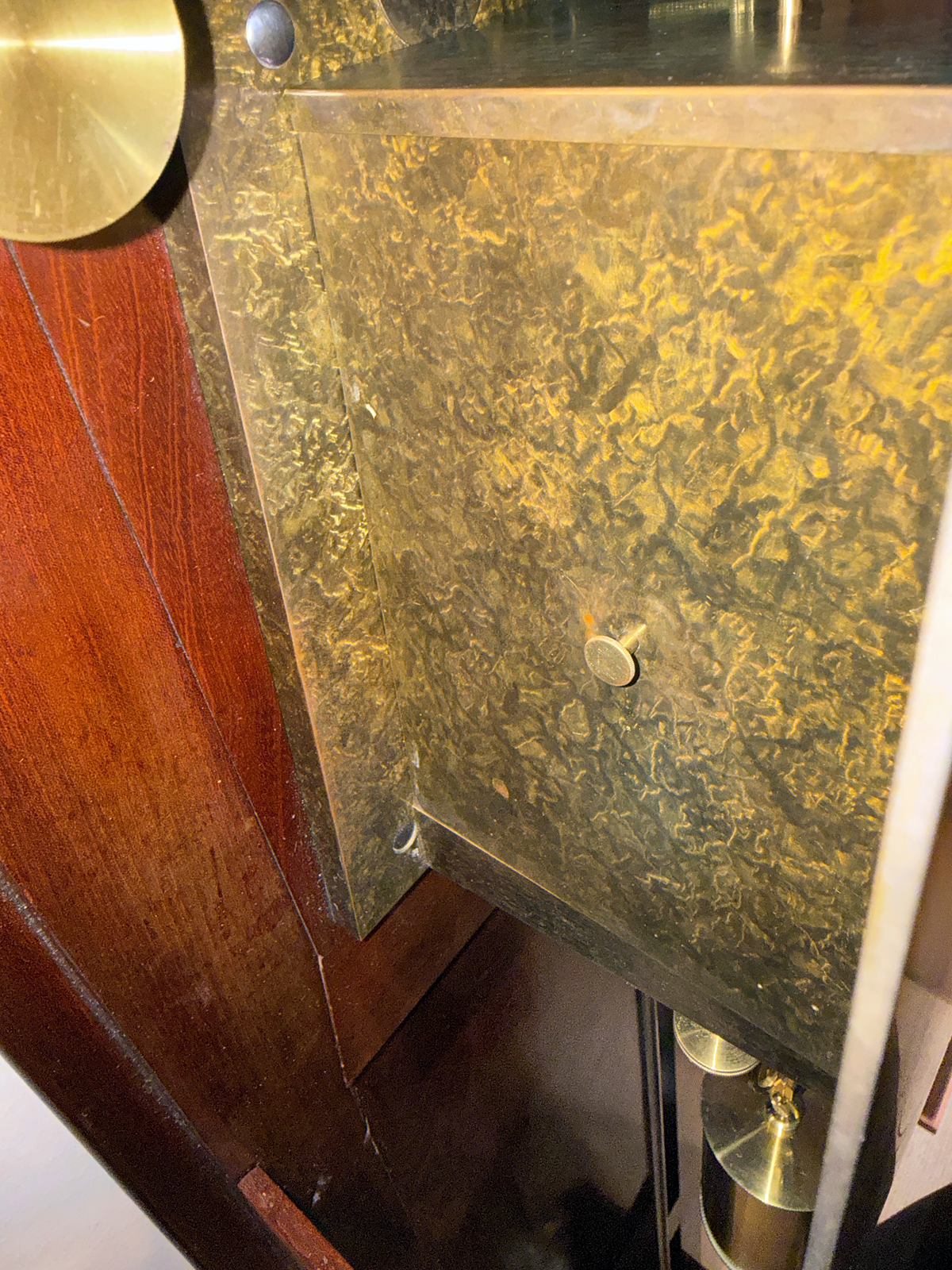
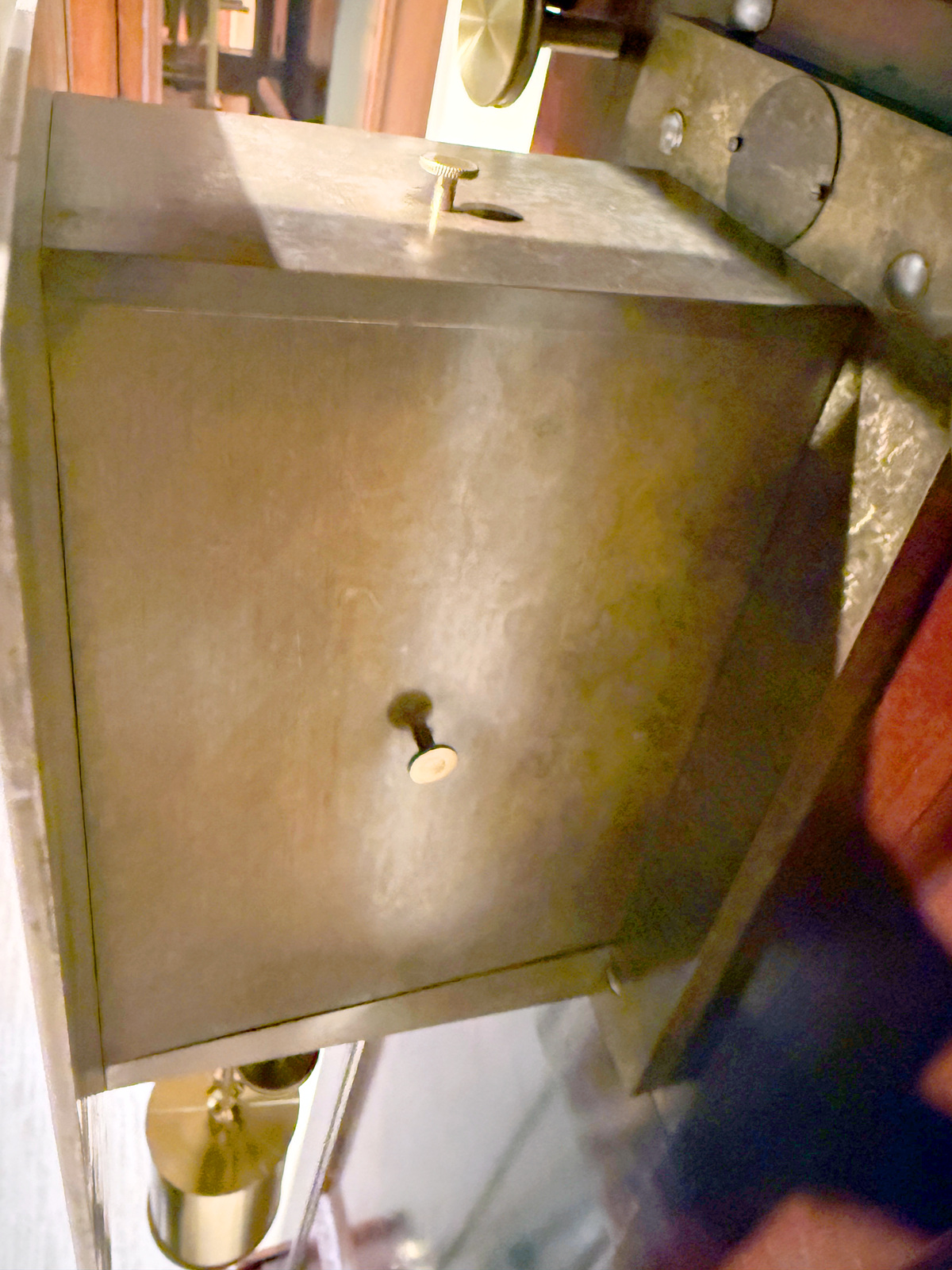
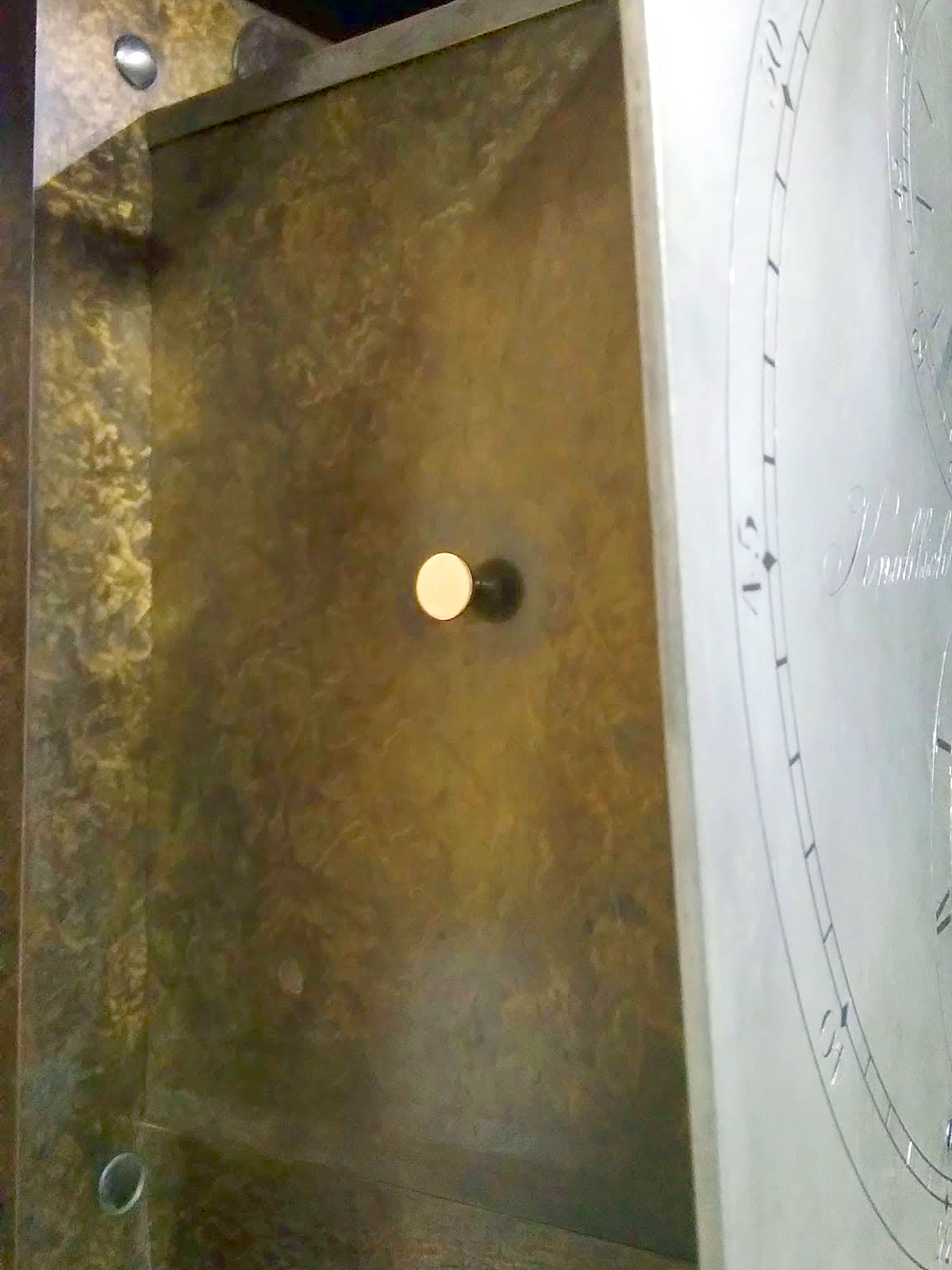
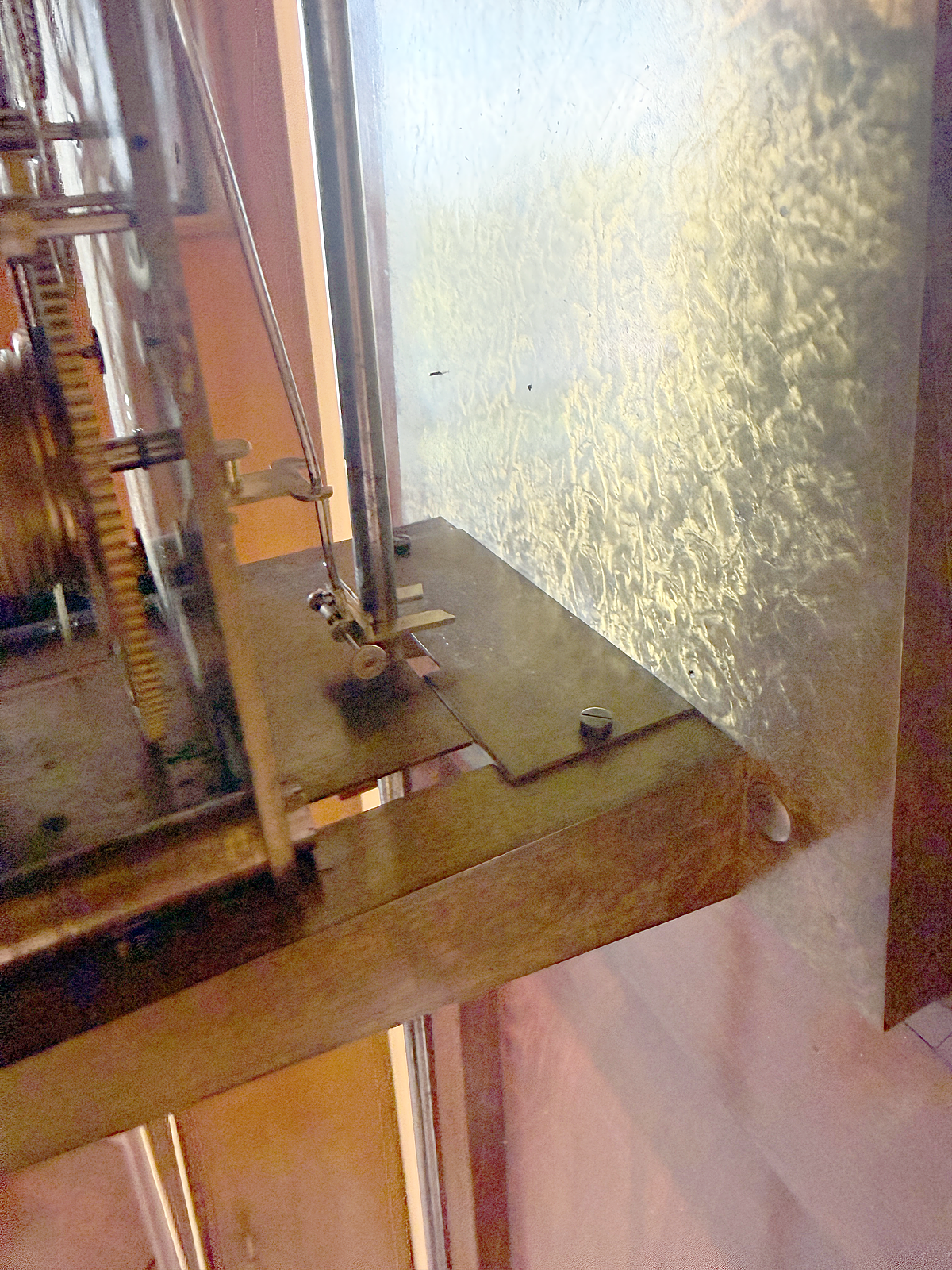
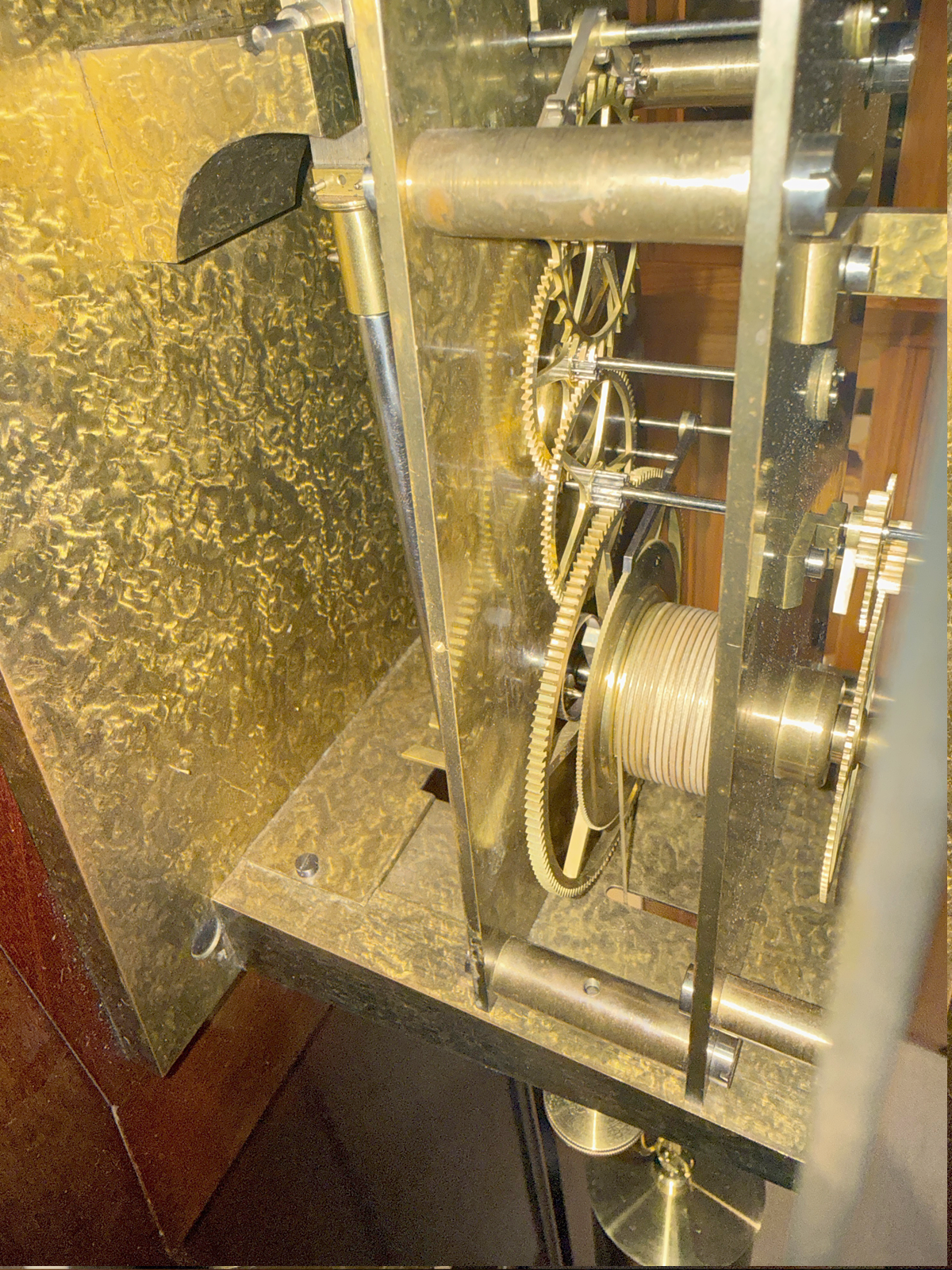
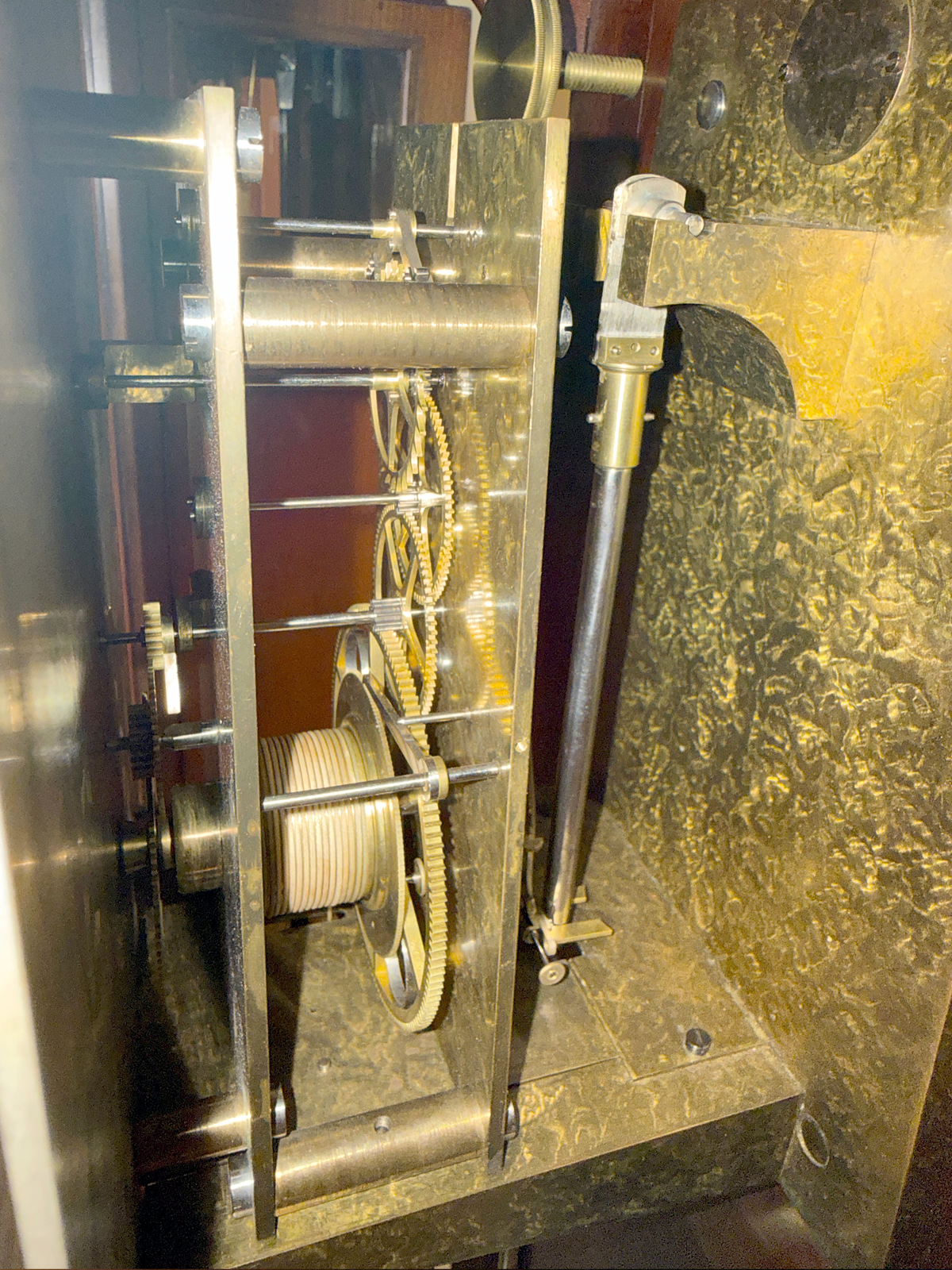
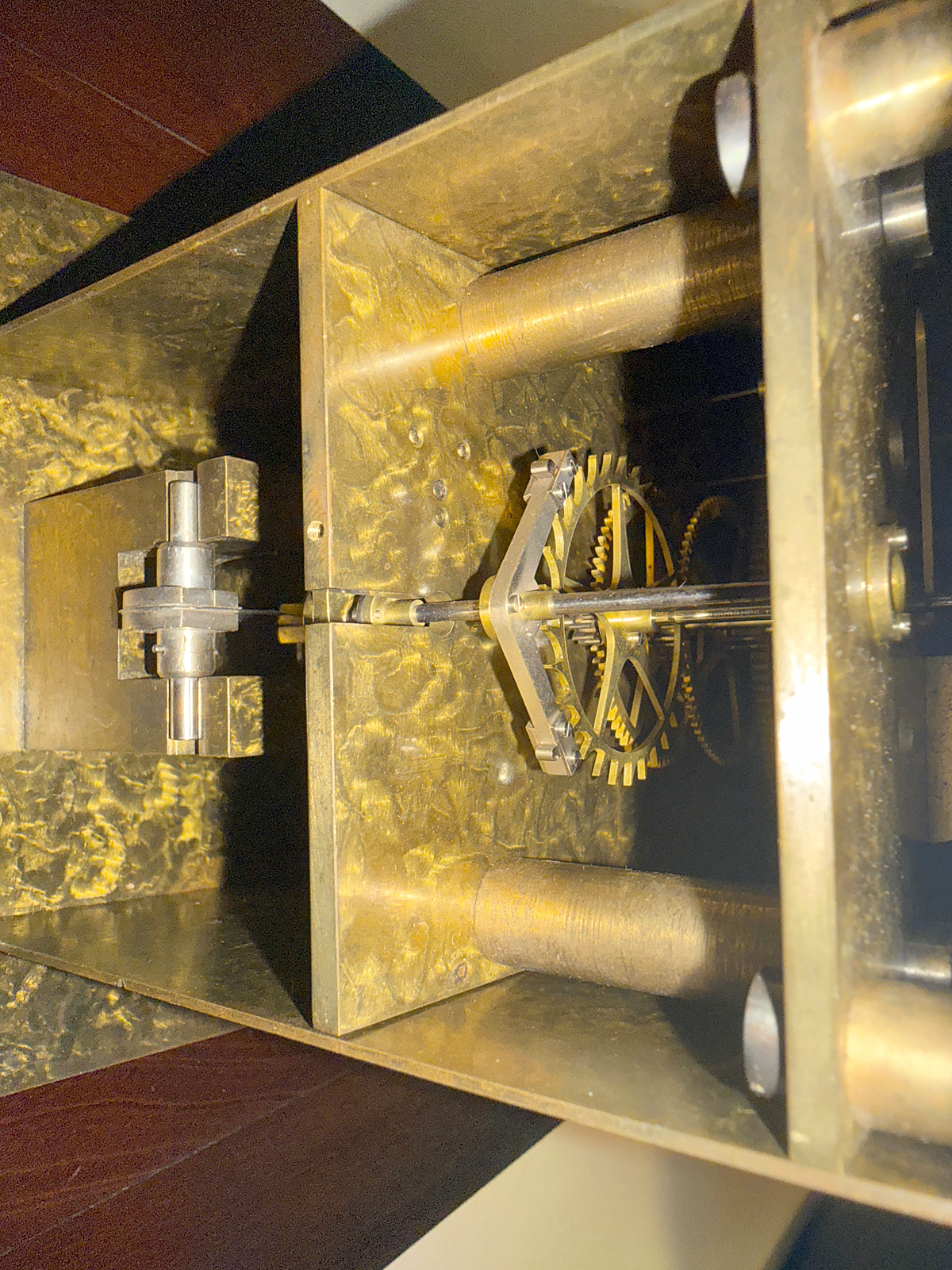
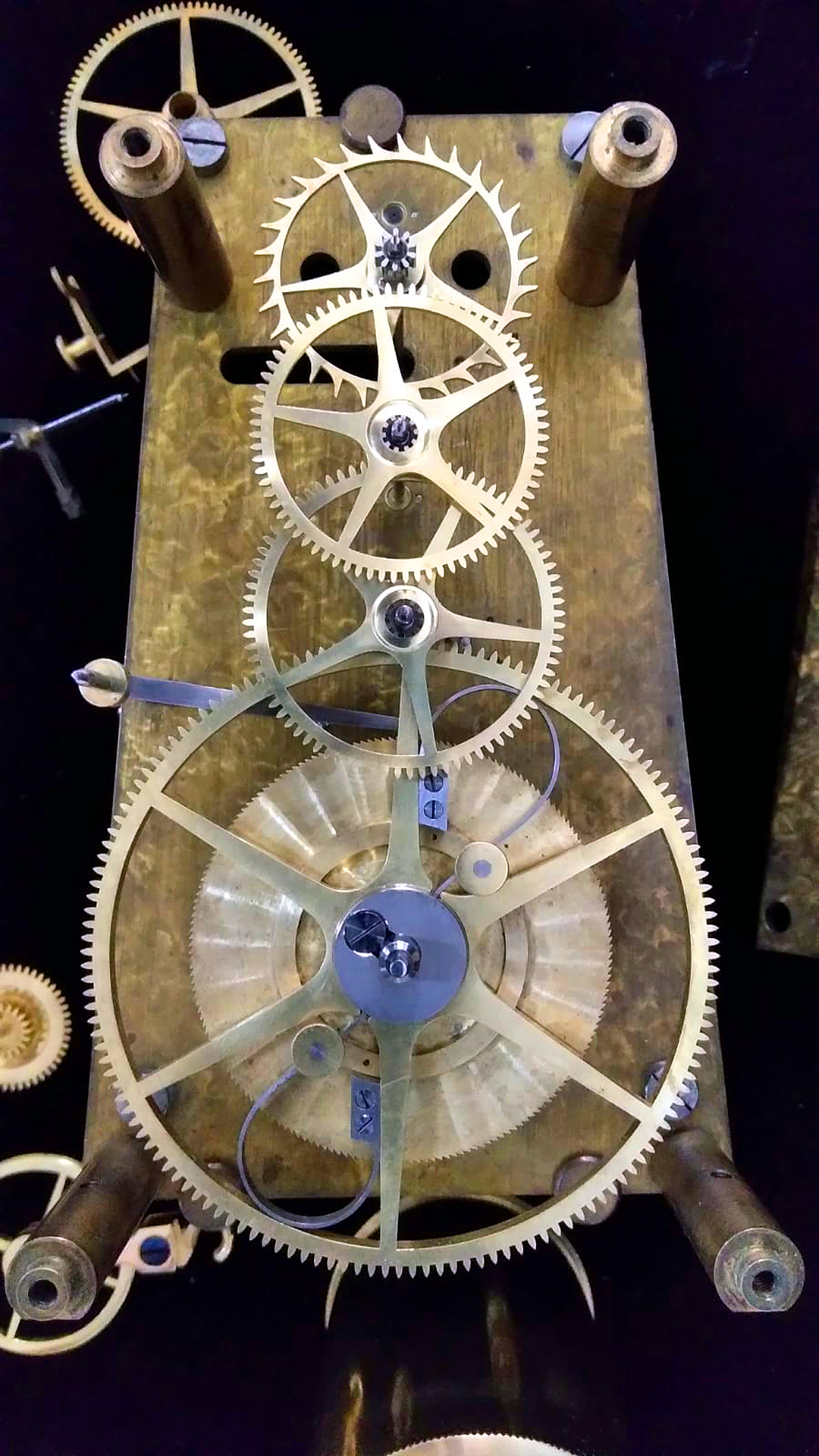
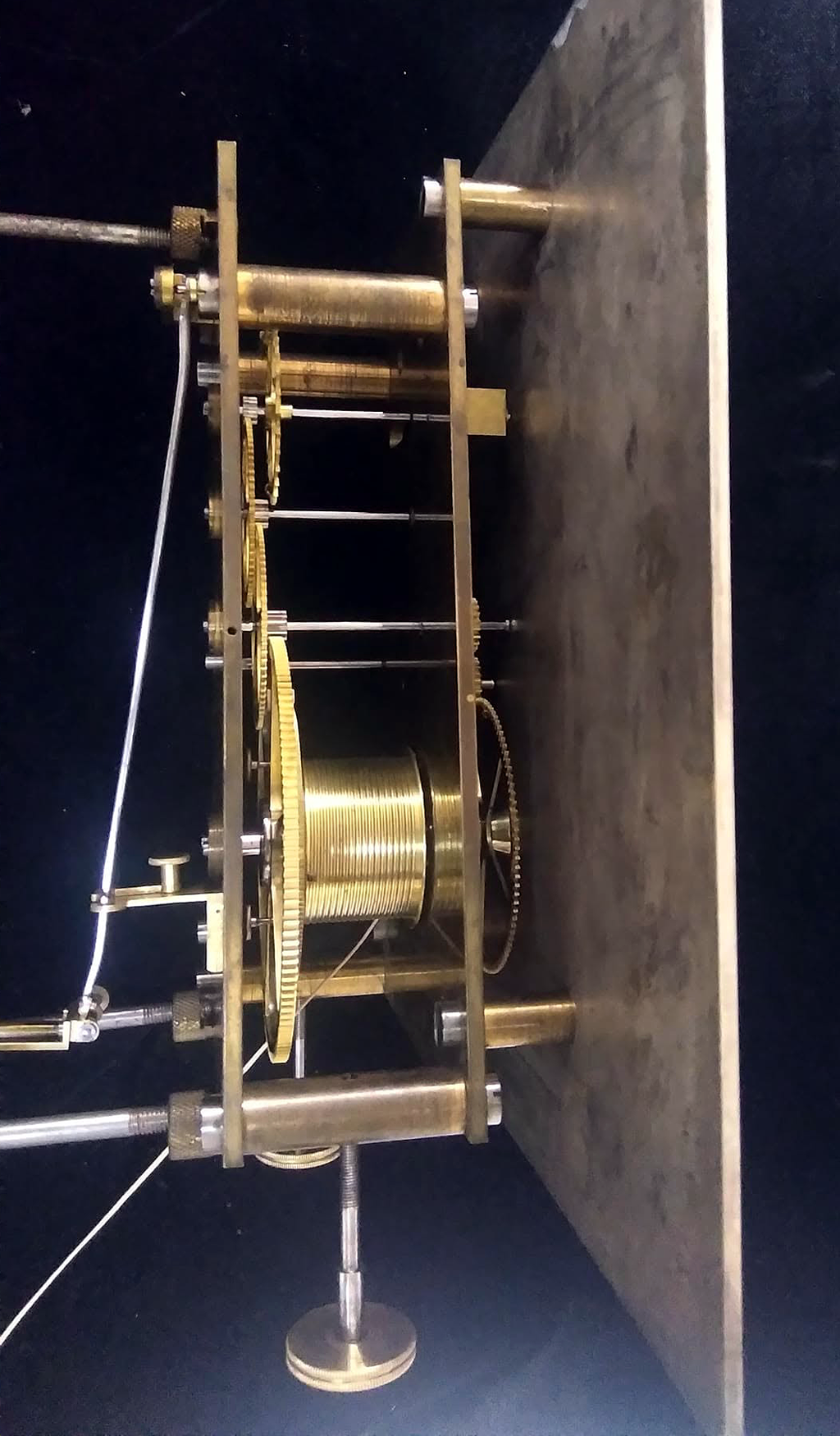
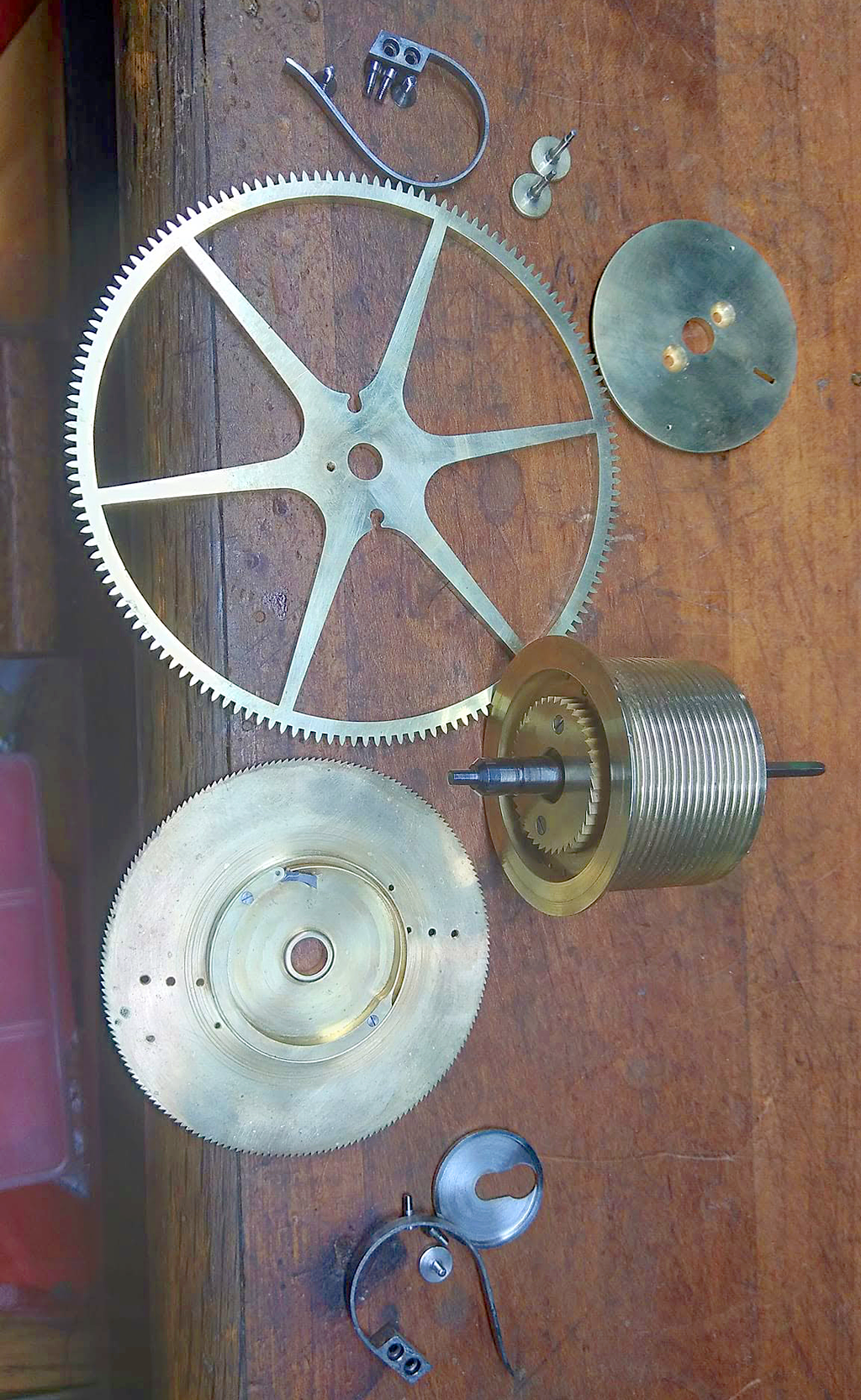
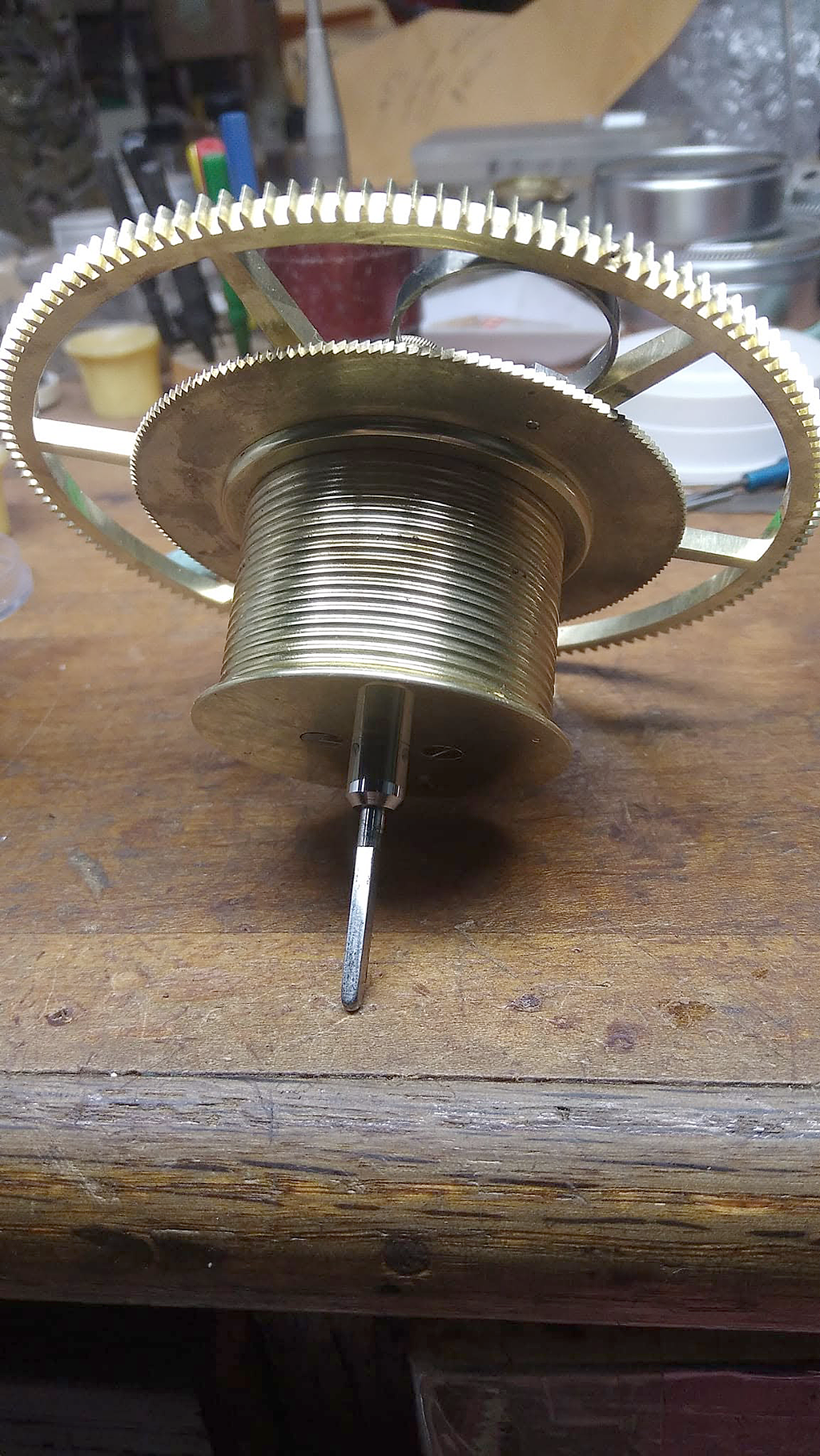
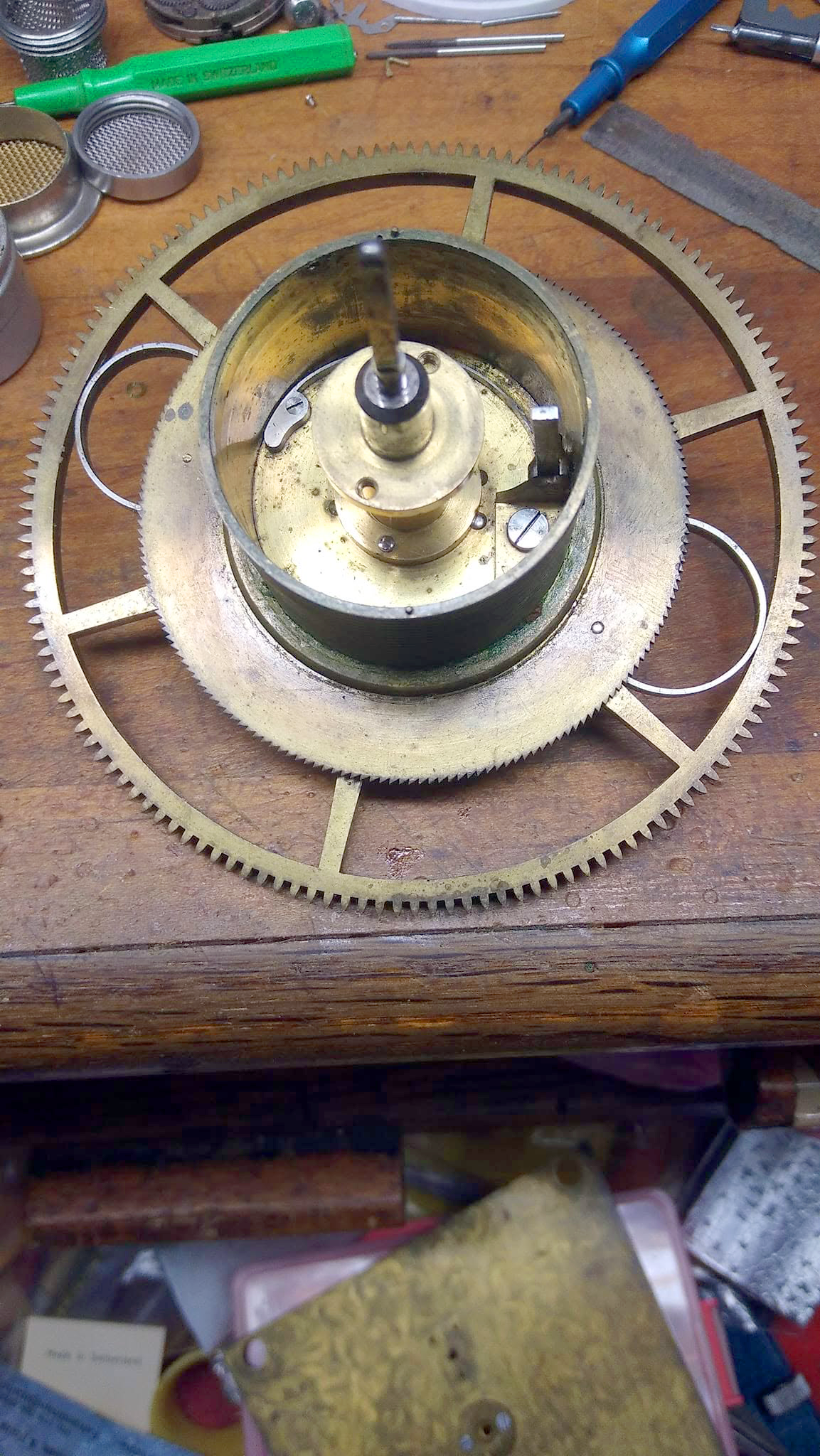
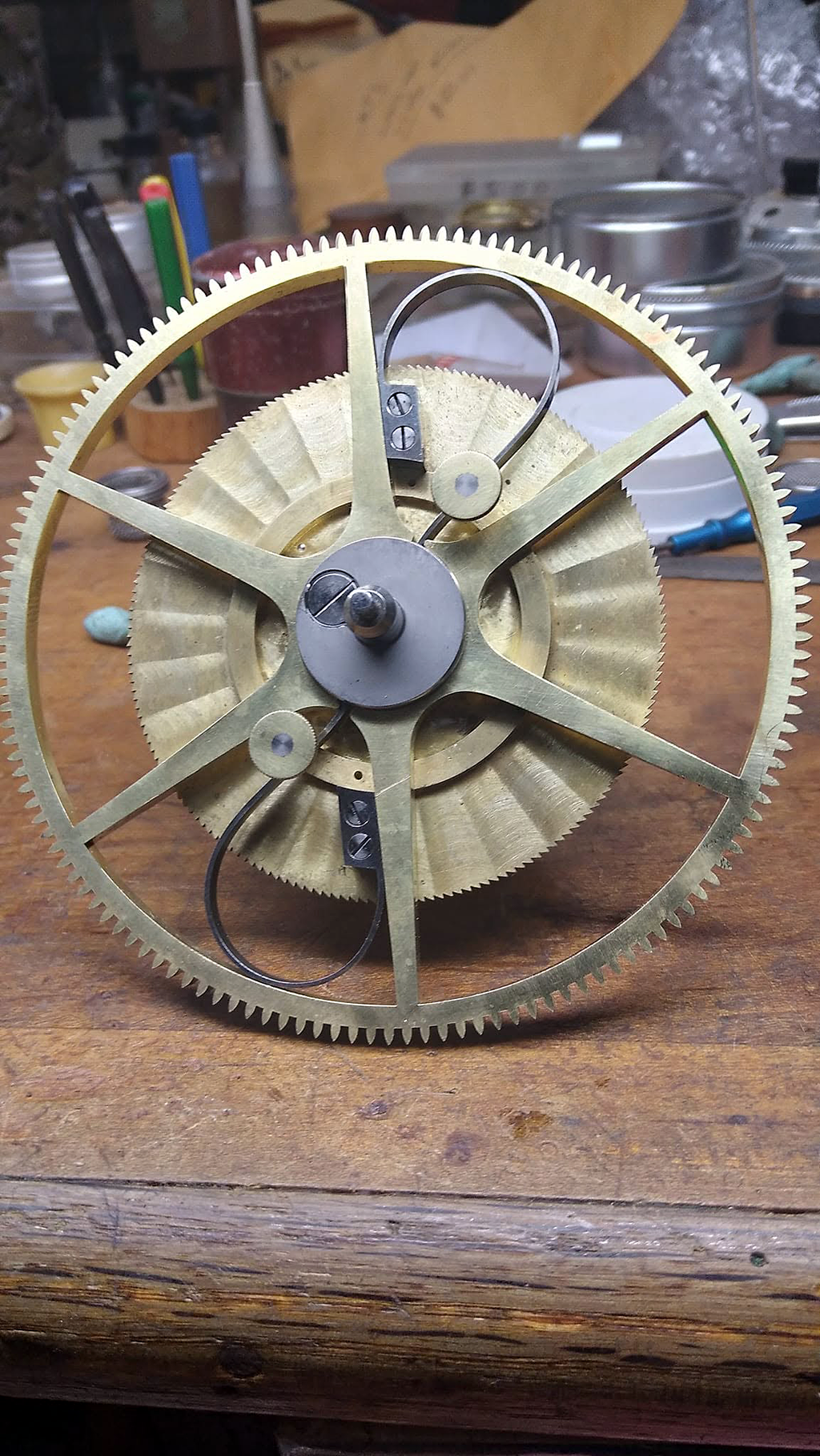
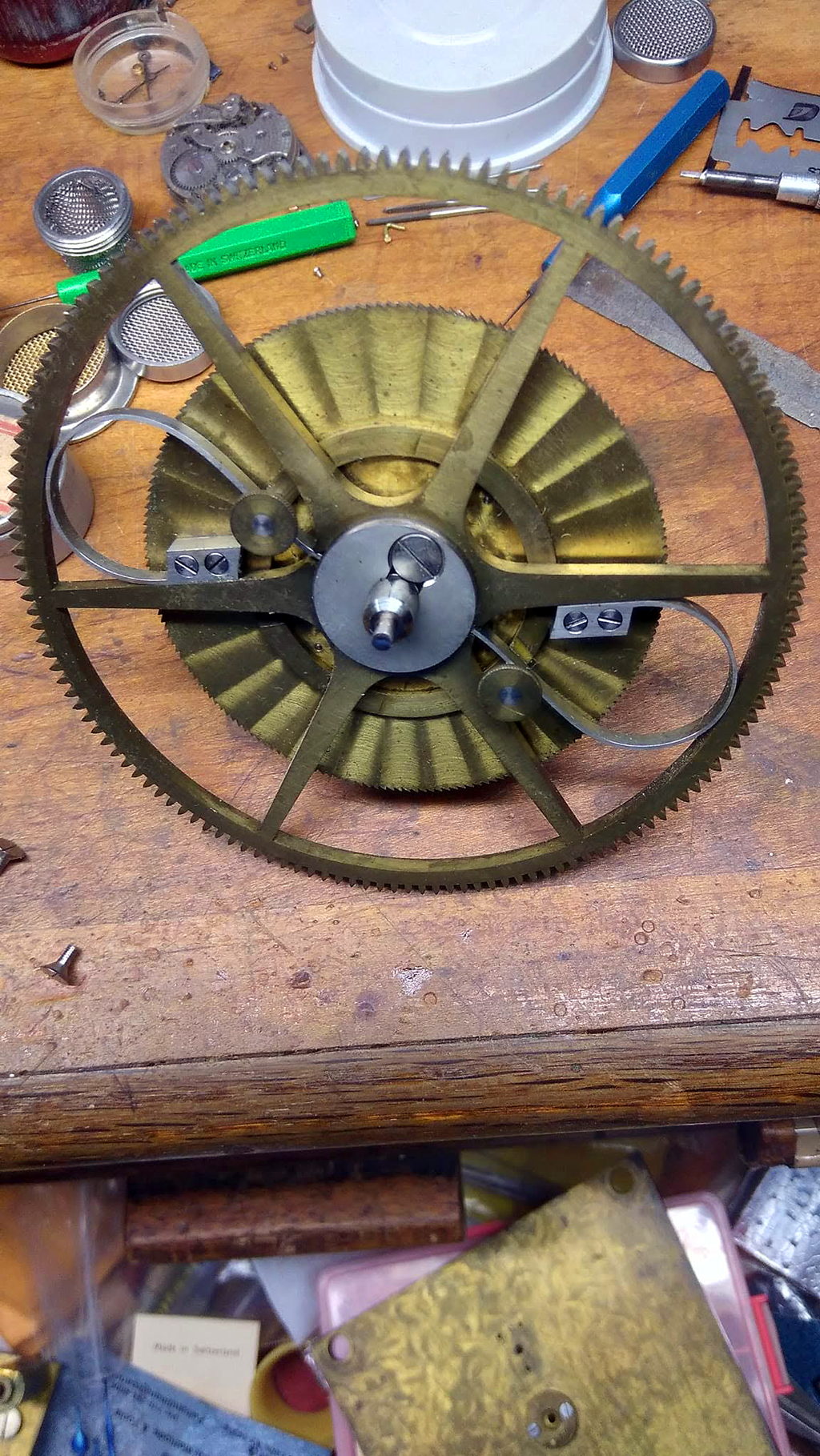
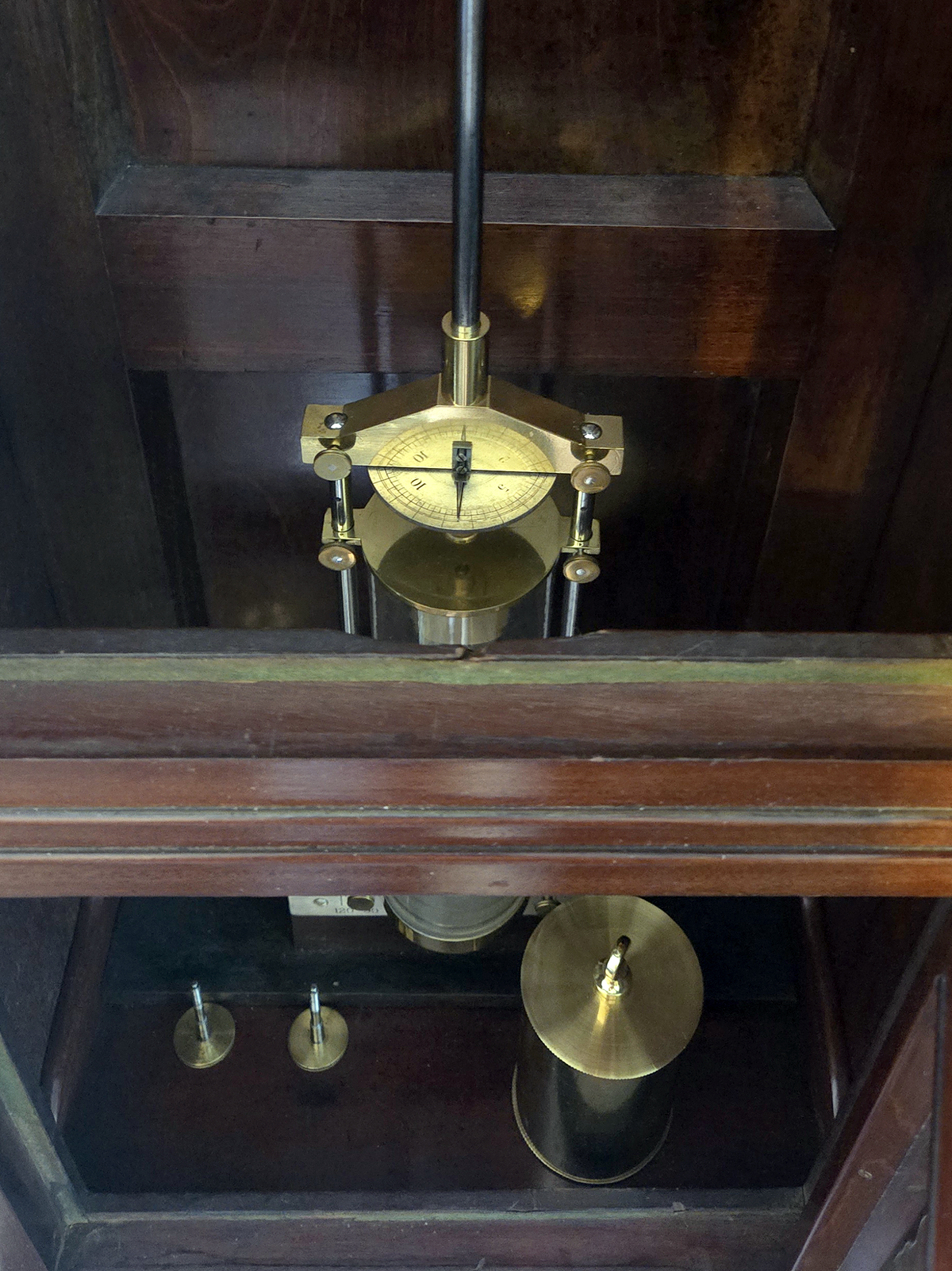
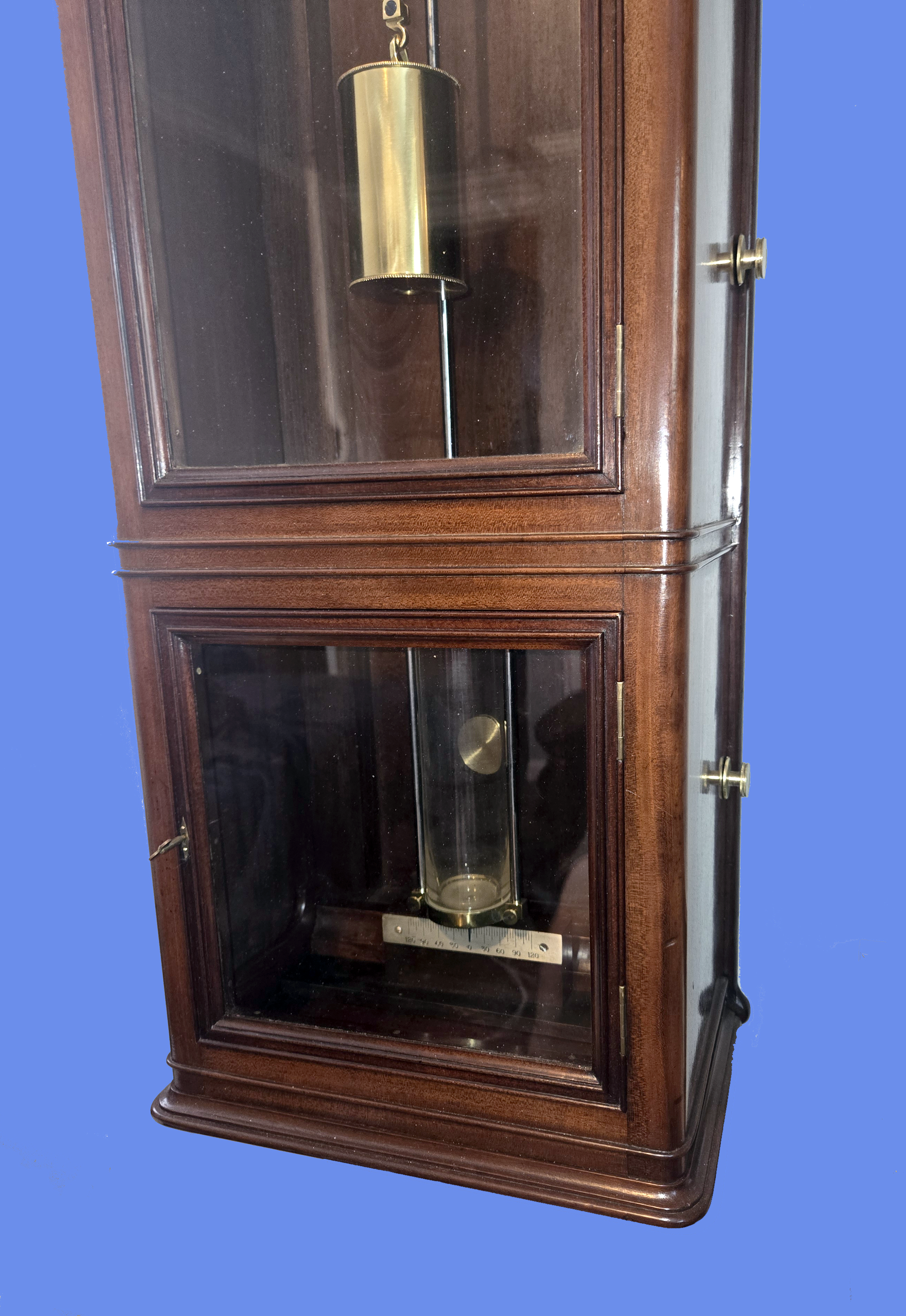
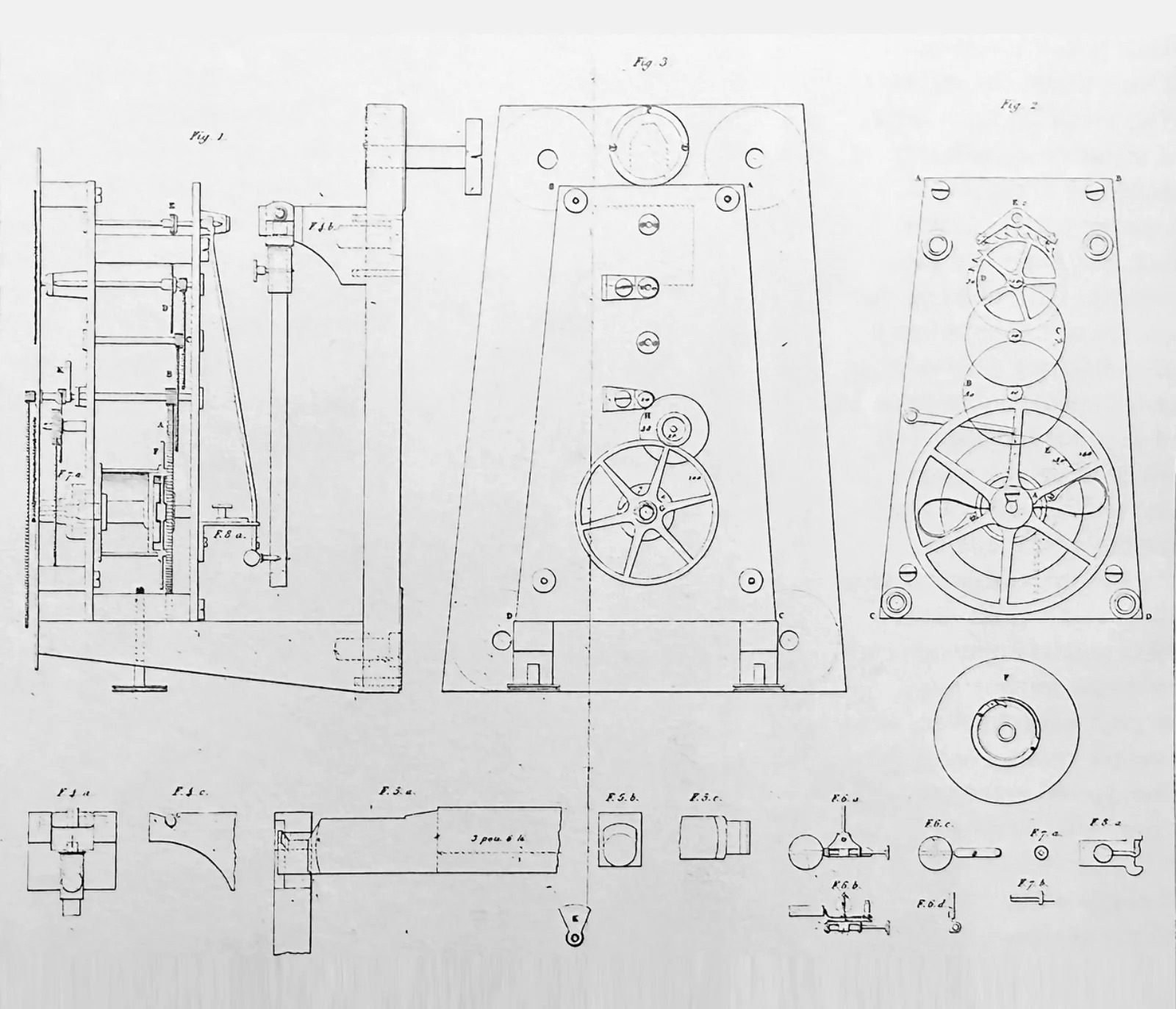
Movement: The 8-day time only weight-driven trapezoid shaped movement is extensively capped and jeweled, is driven by a brass bound weight, has a dead-beat escapement with adjustable pallets, screwed posts, a screwed beat adjustment, a typical Knoblich crutch lock, is wound through the center of the hour hand, has maintaining power and the minute hand has an internal brass counterweight. The movement is surrounded on all sides by dust covers held in place by small knurled knobs. Hanging off the backboard via a suspension spring is the mercury jar pendulum. The jar and its parts are held together by pins with small knurled knobs.
ABOUT KNOBLICH
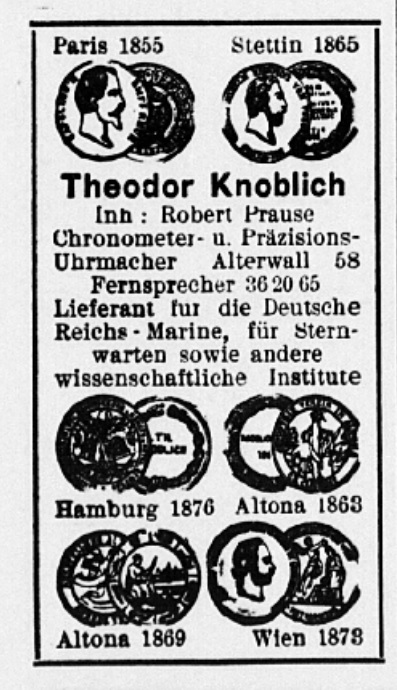
Knoblich was a first-class PPU (precision pendulum clock) maker. He worked with Moritz Krille in Altona; he went on to become head-workman with Schneider in Hamburg and eventually took over Krille's business in 1863. The company now traded as "Theodor Knoblich, Krilles Nachfolger". Knoblich produced many timekeepers with stop watch function and marine chronometers and delivered chronographs and electric clocks to national and international observatories. He kept in close contact with the observatory in Kiel (which had been moved there from Altona). Knoblich received awards in Stettin in 1865, in Altona in 1869 and in Vienna in 1873. He produced fine pendulum clocks and chronometers. In 1891, Knoblich retired and sold his business to A. Meier, who moved it to Hamburg's city center on the Alte Wall. After Meiers died in 1911, Robert Prause took over the company. During a bombing raid in 1943 the entire inventory and all historical documents were totally destroyed.
There are 17 known Knoblich pendulum clocks, most originally in observatories.
1711 1866 leiden observatory (oldest existing university in the world)
1736 1867/68 possibly Navigation School Lübeck (currently @ mechanikus.net)
1770 1869 Bothkamp Observatory
• 1790 1869 California 8-)
1869/70 Munich Observatory
1810 1870/71 unknown, probably KuK-Marine-Sternwarte Pola (Pula), Istria
1812 1870/71 unknown
1813 1871 Altona Observatory
1847 1872 Kiel Observatory, World Exhibition in Vienna 1873, 1938 Bonn Observatory
1848 1873 Navigation School Elsfleth, today on loan Shipping Museum Unterweser, Haus Elsfleth
1952 1877 Potsdam Astrophysical Observatory (dials now signed Hamburg instead of Altona)
1960 1878 (Hamburg) Bankhaus Schröder
1961 1878 Basel von Engelhardt Observatory Dresden/Kasan
1962 1878 Basel Observatory (Bernoullianum), approx. 1878
1963 1878 Observatory Strasbourg, installed 01/78
1964 1878 unknown
2090 1883 German Marine Observatory, Hamburg
ORIGINAL COST
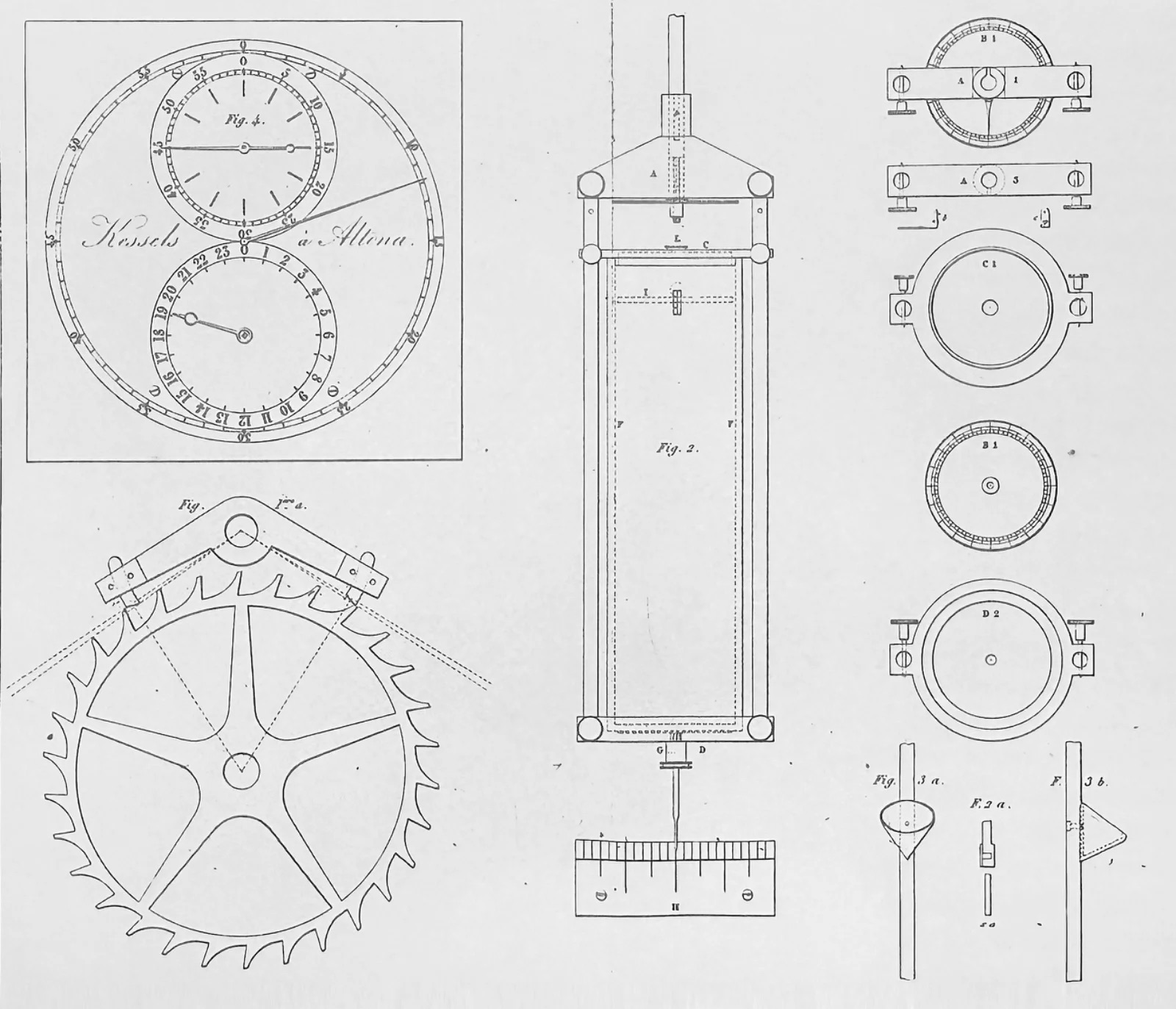
According to Kessels, Knoblich made two types of pendulum clocks:
HOW IT GOT TO CALIFORNIA
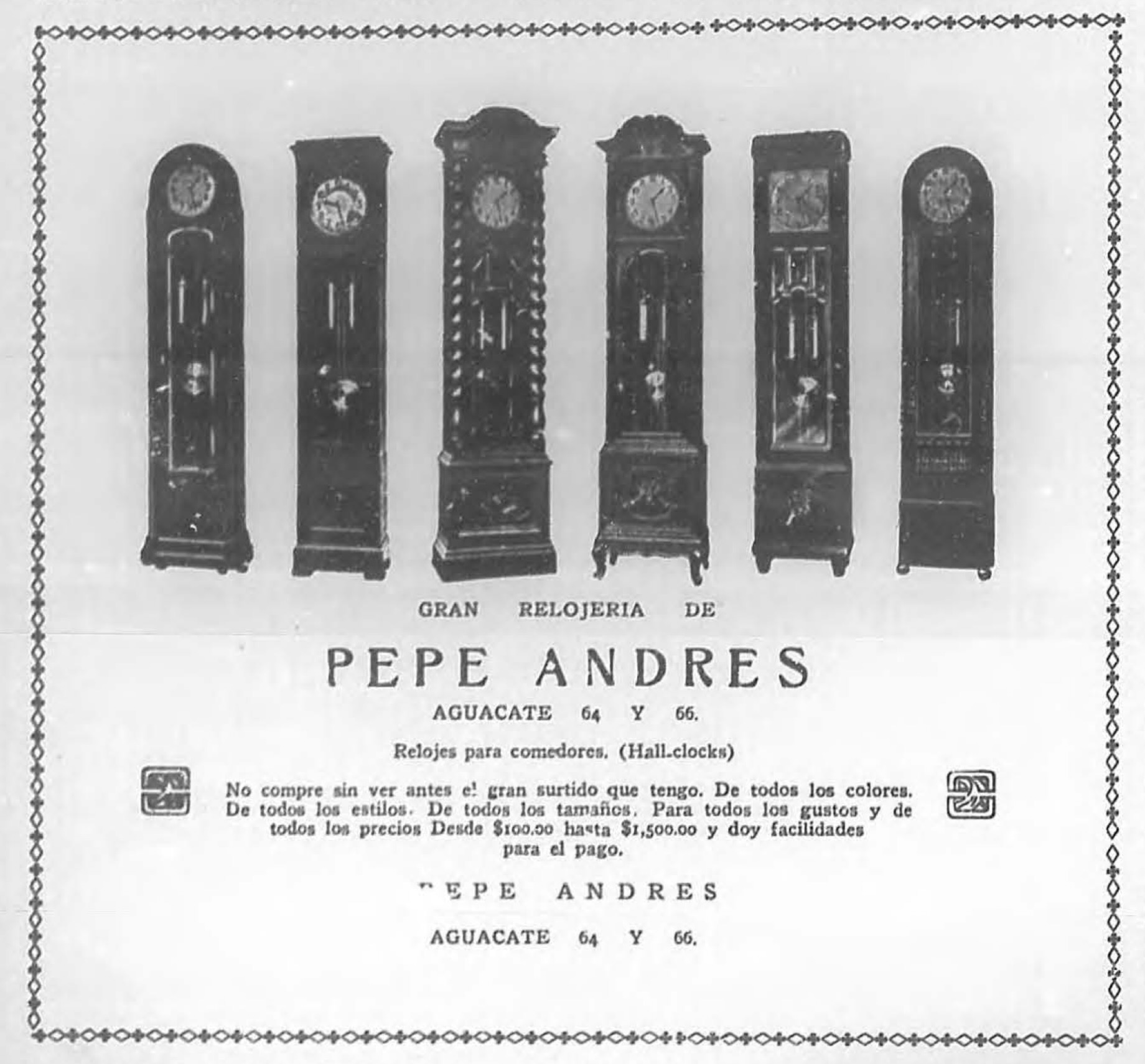
During the 1920s German clock manufacturers and dealers were aggressively re-entering international markets; the clock was purchased by in Germany by Pepe Andrés, a well-known Havana clockmaker and dealer.
ABOUT THE BACK HANGER
The metal plate the clock back hangs from is from the James E. Ward & Co shipping company... famous as the Ward Line. Founded by James Edward Ward, this company held a virtual monopoly on luxury passenger travel and heavy cargo shipping between New York, Nassau, and Havana from the 1870s through the mid-1900s. They operated massive, dedicated private docks and stevedoring departments right in Havana Harbor to handle their fleet of steamships.
Size: 52.5" high x 13.5" wide x 8.5" deep
Case: The mahogany case has three hinged felt lined doors with locks. The thick paneled backboard has giant knurled brass set screws, a thick movement and pendulum bracket and two removeable covers held in place by 8 knurled brass screws.
Dial: The 8 7/8 in. finely engraved silvered astro dial has Roman numerals for the hours, Arabic numbers for both the five-minute marks and the seconds dial, observatory marks, steel cut hands and is signed by the maker 'Knoblich a Altona'.
Movement: The 8-day time only weight-driven trapezoid shaped movement is extensively capped and jeweled, is driven by a brass bound weight, has a dead-beat escapement with adjustable pallets, screwed posts, a screwed beat adjustment, a typical Knoblich crutch lock, is wound through the center of the hour hand, has maintaining power and the minute hand has an internal brass counterweight. The movement is surrounded on all sides by dust covers held in place by small knurled knobs. Hanging off the backboard via a suspension spring is the mercury jar pendulum. The jar and its parts are held together by pins with small knurled knobs.
ABOUT KNOBLICH
Knoblich was a first-class PPU (precision pendulum clock) maker. He worked with Moritz Krille in Altona; he went on to become head-workman with Schneider in Hamburg and eventually took over Krille's business in 1863. The company now traded as "Theodor Knoblich, Krilles Nachfolger". Knoblich produced many timekeepers with stop watch function and marine chronometers and delivered chronographs and electric clocks to national and international observatories. He kept in close contact with the observatory in Kiel (which had been moved there from Altona). Knoblich received awards in Stettin in 1865, in Altona in 1869 and in Vienna in 1873. He produced fine pendulum clocks and chronometers. In 1891, Knoblich retired and sold his business to A. Meier, who moved it to Hamburg's city center on the Alte Wall. After Meiers died in 1911, Robert Prause took over the company. During a bombing raid in 1943 the entire inventory and all historical documents were totally destroyed.
There are 17 known Knoblich pendulum clocks, most originally in observatories.
1711 1866 leiden observatory (oldest existing university in the world)
1736 1867/68 possibly Navigation School Lübeck (currently @ mechanikus.net)
1770 1869 Bothkamp Observatory
• 1790 1869 California 8-)
1869/70 Munich Observatory
1810 1870/71 unknown, probably KuK-Marine-Sternwarte Pola (Pula), Istria
1812 1870/71 unknown
1813 1871 Altona Observatory
1847 1872 Kiel Observatory, World Exhibition in Vienna 1873, 1938 Bonn Observatory
1848 1873 Navigation School Elsfleth, today on loan Shipping Museum Unterweser, Haus Elsfleth
1952 1877 Potsdam Astrophysical Observatory (dials now signed Hamburg instead of Altona)
1960 1878 (Hamburg) Bankhaus Schröder
1961 1878 Basel von Engelhardt Observatory Dresden/Kasan
1962 1878 Basel Observatory (Bernoullianum), approx. 1878
1963 1878 Observatory Strasbourg, installed 01/78
1964 1878 unknown
2090 1883 German Marine Observatory, Hamburg
ORIGINAL COST
According to Kessels, Knoblich made two types of pendulum clocks:
| Original Cost | 1864 Value Gold | 2026 USD (approx.) | |
| An astronomical PPU 'of great quality' | 800 Courant-Marks | $228.68 | ~$4,863.72 |
| An astronomical PPU 'with less luxury' | 600 Courant-Marks | $171.51 | ~$3,647.79 | If calculating from the heavily inflated 1864 wartime paper Greenback baseline, the equivalent 2026 purchasing power spikes to roughly $8,297.25 for the plain version and $11,062.99 for the luxury one. |
HOW IT GOT TO CALIFORNIA
During the 1920s German clock manufacturers and dealers were aggressively re-entering international markets; the clock was purchased by in Germany by Pepe Andrés, a well-known Havana clockmaker and dealer.
| 1910 | Andrés open for business, Aguacate 64 near Obispo |
| 1915 | earliest found ad, selling clocks and watches |
| 1926 | 'Gran Relojería de Pepe Andrés, Aguacate 64 y 66', specifically selling hall clocks |
| 1947 | Andrés installs a large four-dial tower clock at the San Juan Bosco church, Havana | From Havana, it made its way to Miami to Pepe's great- grandson (also a clockmaker), and then to New York. |
ABOUT THE BACK HANGER
The metal plate the clock back hangs from is from the James E. Ward & Co shipping company... famous as the Ward Line. Founded by James Edward Ward, this company held a virtual monopoly on luxury passenger travel and heavy cargo shipping between New York, Nassau, and Havana from the 1870s through the mid-1900s. They operated massive, dedicated private docks and stevedoring departments right in Havana Harbor to handle their fleet of steamships.